与「BSD」相关的搜索结果
BSD 贴吧
一个关键词就是一个贴吧,路径全站唯一。
用户
未找到
包含 BSD 的内容

255M views on a 3D Short by Zack D. Films
i tried to rebuild his style with ONE Claude prompt, then ran it on Opus 5.5 and Fable 5.2 (they did NOT make the same Short)
the full prompt is below ↓
paste it into Claude Code in an empty folder and answer its 2 questions. it shows u the script and waits for ur go. u need Blender + its free MPFB add-on and a graphics card. give it a few hours (the prompt is minus one optional paid-voice line)
Ask me 2 things, then wait:
1. The story in one line: a strange TRUE event where one person did one odd physical thing ("He tied 42 weather balloons to a lawn chair."). If I say "you pick", pitch 3 with one source link each and take the first unless I choose.
2. The voice. Default: Kokoro (free, runs on my computer), a calm, warm male narrator.
Then tell me everything else is free: Blender (find my install, or tell me the one download), its free MPFB extension for human bodies (ask me before you install it) and into this folder a Python venv with FFmpeg (imageio-ffmpeg), kokoro-onnx + its model files (kokoro-v1.0.onnx and voices-v1.0.bin from the kokoro-onnx GitHub releases), faster-whisper (small.en), numpy and Pillow. It needs no API key or account and renders on my graphics card with EEVEE.
The look: a clean, realistic 3D world, like a good game cutscene. Bright, saturated, a little filmic.
- People: realistic bodies with generic faces and big readable expressions (shock, a smirk, a scream). Plain clothes, no logos. Never a real person's likeness: for a real person keep the face out of close-ups (hands, back, side, distance, straight top-down).
- CALM shots only. Bodies in fast action or contact (running, jumping, fighting, falling) look stiff, so tell the story with frozen moments under a slowly moving camera, macro inserts of hands and objects, rooms, vehicles, the sky, top-down views and the aftermath.
- One new picture for every caption chunk (2-4 words, about 1-1.5 s): a new framing, a new action or a camera move. Nothing ever holds still: every shot drifts, pushes in or orbits.
- The shot kit: macro insert (extreme close-up of the key object or hands, very shallow depth of field), hero low angle (wide lens at waist height), god's-eye top-down with a slow rotate, tracked object, over the shoulder, smash zoom on the word that matters, whip pan between beats, glow highlight (the named object glows orange with a rim, then fades), a big 3D number lying in the scene, a thought bubble (a cloud ring showing what he hoped for), a TV in the scene replaying the event.
- Light: a bright warm sun, blue sky with clouds, soft shadows. Night scenes use hard lamps and a dark sky. Wide lens up close, depth of field on every shot, motion blur on every fast camera move.
- Captions: 2-4 words at a time, white bold rounded sans, about 64 px on a 1080 px-wide frame, centred, 78% down the frame, soft dark shadow, no box. Each chunk replaces the last on the same frame as its picture.
- Banned: real footage, photos, downloaded textures or 3D models, logos, AI images or AI video, downloaded music, gore.
38-50 s, 100-140 words, 150-180 words a minute. The voice starts at 0.0 s.
- Line 1: the most surprising physical act, in past tense, opening with "He" (or "She"). No name, date or setup. Frame 1 shows that act.
- Then a cause-and-effect chain: every sentence starts with a hinge word (Then, Suddenly, So, Because, But, Later) and is ONE visible action.
- The context arrives late, after "You see,".
- A reveal: someone looks closer and the story turns.
- The last line is the consequence. No call to action, no question.
- Names are rare: use one only when it pays off.
Title = "He ..." or "The Man Who ...". The cover is the first frame.
Save every stage to disk so a crash never costs more than one stage.
- sources.md: every fact with its link and the date you read it. Anything you can't verify stays out.
- script.json: the lines and the caption chunks cut by hand (2-4 words, one picture each), each chunk with its shot: the set, the camera, what moves.
- Kokoro reads the whole script in one take (speed 1.0-1.1) and pauses are squeezed to 0.35 s at most; faster-whisper times every word (pass it a 16 kHz numpy array, not a path); write chunks.json with each chunk's start and end. A picture and its caption switch together on frame round(start*30)+1.
- blender/: Python scripts run headless (blender -b -P). makes one .blend with the sets, the cast, the props and every shot baked with a key on every frame. sets EEVEE with ray tracing, the AgX view with the Punchy look, motion blur, depth of field and bloom in the compositor. Bodies come from MPFB or are built by you; clothes, hair, props and sets are built in code.
- Stills first: one half-size still per shot as a contact sheet. Look at every tile and fix what's off before any full render. Time one full-size frame and tell me the estimate.
- Render 1080x1920 at 30 fps to PNG frames, skipping frames already on disk.
- numpy only: a light music bed, a sound on every action (a whoosh on each whip pan, hits, wind, room tone), ducked under the voice, mastered to -14 LUFS on the whole stereo mix.
- burn the captions in from chunks.json. Encode out/_9x16.mp4 (1080x1920, 30 fps, TV-range yuv420p) and out/_x_7x8.mp4 (1008x1152, under 10 MB, 2-pass): a crop of the 9:16 frame that keeps the subject and the caption.
- Blender paths: pass absolute output paths (a relative one lands on the drive root).
- MPFB headless: enable it with addon_utils.enable("bl_ext.user_default.mpfb"). Bake a body's shape keys before you pose it: the rig is fitted to the baked shape.
- Clothes: cut them from the body mesh and push them 7-16 mm out along the normals; keep two rings of body faces under every hem.
- Nothing coplanar: keep every resting object 1 cm off its neighbour and draw ground markings into the texture, or they flicker.
- Hair: EEVEE draws hair only from a Curves object, hair type STRIP. Use a Principled BSDF on it (the Hair BSDF renders black).
- Skin: keep subsurface weight near 0.2 (more turns faces black in EEVEE) and add a soft fill light from below under a noon sun.
- Hands: a curled hand reads as a claw from the palm side, so shoot a grip from behind the knuckles.
- Motion blur: shutter position START, a key on every frame, plus a key half a frame after each shot's last frame, so blur never reaches across a cut.
- Check: run a black-frame and one-frame-flicker check on the render. Make a contact sheet (a frame every 0.5 s) and look at every tile: the act reads in the first 2 s, faces are lit, nothing clips through anything, captions stay off faces and key objects. Then step through the first 2 s, the middle and the end frame by frame. Fix, render only the changed shots again.
Pitch (or take my story), then show me the script with the word count, the caption chunks with their seconds and the shot list with what the first frame shows. Build nothing until I say go.
how the two runs went: one run each on the same PC, so it's one sample, not a ranking. both took under 3 hours on one shared 8 GB graphics card. the story for both: a man who tied 42 weather balloons to a lawn chair in 1982
where they split:
-> Opus opened wide on the balloons over the yard. Fable opened on the man kneeling at the chair with his Jeep behind him
-> Opus put 5 big 3D numbers in its scenes, Fable 2
-> Fable followed the caption spec (white text, soft shadow). Opus went ALL CAPS with a thick outline
-> Fable pulled the Smithsonian's own record and ended on the chair in the museum. Opus ended on the $1,500 fine
-> a few Opus shots are hazy and one opens on a blank grey frame
save this for ur next Short. who did it better, Opus or Fable?
显示更多


2026.09.27
NANIWA SPLASH 3部
中之島GATEサウスピア
倉坂くるるさん(@Kururu_45)
※御本人掲載確認済
流石のおちり
#NANIWASPLASH2026#


这就舒服了!股票技术指标不用再一个个手写——stockstats,1.5K stars
50+ 技术指标直接做成 pandas 列,df['macd'] 一行取,金叉死叉也能直接判断。
以前算技术指标,要自己写 RSI、MACD、布林带这些公式,或者接 TA-Lib,来回维护很麻烦。
stockstats 的思路很直接:给 pandas.DataFrame 套一层 StockDataFrame,行情数据进去,df['rsi']、df['macd']、df['boll'] 直接取,跟普通列差不多。
核心亮点:
1️⃣ 50+ 技术指标:MACD、KDJ、RSI、布林带、ATR、CCI、Supertrend、一目均衡等
2️⃣ pandas 无缝衔接:指标按需计算,用到哪列再算哪列
3️⃣ 金叉死叉直接写:close_10_sma_xu_close_50_sma 可判断均线交叉
4️⃣ 比较信号也内置:rsi_ge_70、kdjk_xu_kdjd 这类条件可以直接进策略
5️⃣ 安装简单:pip install stockstats,Python 3.9+,BSD-3-Clause 开源
我比较喜欢的是,它把算技术指标变成了取 DataFrame 的一列。
写策略、做因子或者 ML 特征工程时,不用再维护一堆 RSI、MACD 的计算公式,数据准备好,直接拿指标和信号。
显示更多


Bom dia em 2018, bom dia em 2026!
Bom dia meu povo ❤️


我做了一个PPT Skill,这可能会让 PPT 真正进入 AI 时代。
它跟你见过的所有AI做PPT,都不一样。别的工具是“生成即交付”,你只有选择要或不要的权利。而这款dashiAI-PPT-skill给你的,不只是好看,更是好改。
你可以丢一份文档给它、也可以让它自拟内容,生成的每一页PPT都配有控制台,小到改个字,大到加卡片、换布局、加图片、加视频、换配色、换图表,甚至是更换页面重点。20多种参数,你能想到的,它都能改。无论怎样改,布局都不乱。
另外,针对所有AI ppt产品未涉及的图表、逻辑图、架构图、分析模型,我们训练了大量的页面,满足职场人的那点“小心思”。
最后,还能导出ppt文件。
说到底,它不是生成完就甩给你的成品而是一个能听懂你的判断,并且把决定权还给你的 PPT 助手。
这套dashiAI-PPT-skill,完全免费,已经开源在 GitHub 上。
显示更多


据 The Information,预测市场 Polymarket 正推动交易者进行身份识别(KYC),以应对监管、制裁及潜在法律风险。报道称,部分用户仍通过自动化交易机器人等方式参与受限地区相关市场交易,并在俄罗斯等地区形成灰色使用路径;部分开发者还通过 Telegram 等工具引导交易流量。
显示更多



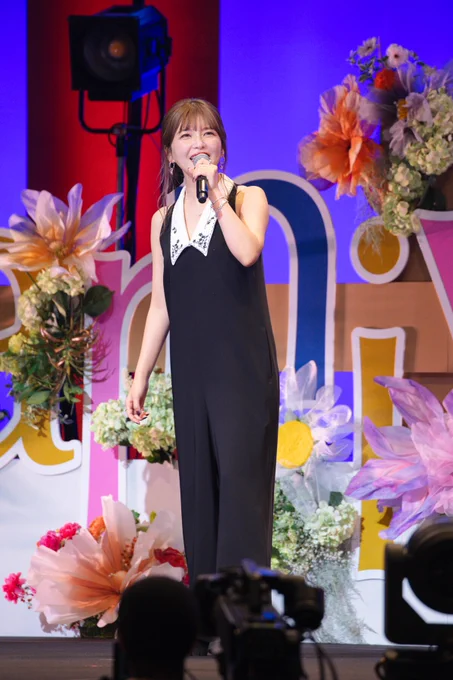
【イベントレポート】
AAAデビュー20周年ファンミーティング
宇野実彩子、與真司郎、末吉秀太が再会誓う
今後のライブ開催に向け「動いてます」
「信じて待ってて」「楽しみにしてて」
🔽詳細・ソロカット含む写真7枚
#AAA# #AlwaysAllAround#
显示更多