与「RocNation」相关的搜索结果
RocNation 贴吧
一个关键词就是一个贴吧,路径全站唯一。
用户
未找到
包含 RocNation 的内容

🚨🔵⚪️ RC Strasbourg agree deal to sign Karim Coulibaly from Werder Bremen, here we go!
Deal in place at €20m fixed fee and sell-on clause, no add-ons.
German CB seen as potential future top player by BlueCo who own #CFC# and Strasbourg.
Deal led by Roc Nation Sports and Nochi Hamasor.
显示更多


2025 QWER 1ST WORLD TOUR in SEOUL OFFICIAL MD
in SEOUL OFFICIAL MD는 별도의 현장 판매 없이 사전 구매, 현장 수령으로만 진행됩니다.
[KREAM MD 사전 판매]
🔗
🧭2025.09.17 08:00PM(KST) ~ 2025.10.01 08:00PM(KST)
해당 이미지는 참고를 위한 이미지로, 실제 상품과 다를 수 있습니다.
당일 현장 구매는 불가능합니다.
#QWER# #ROCKATION#
显示更多


code for review :
Prompt :
Create a 2D anime short for the web. It must look completely like real Japanese anime, as if it were taken directly from a finished theatrical anime film. This is traditional-looking, hand-drawn 2D anime, not a 3D animation, a moving illustration, or a stylized web graphic.
Deliver the final result as a single, self-contained HTML file that plays offline, with a synthesized soundtrack. Use any tools, libraries, references, guides, literally anything etc.
Use theatrical mecha and kaiju anime as the art style reference for the design, line work, painted backgrounds, color, and atmosphere. The film is 83 seconds long, in 39 shots. Its characters are a colossal silver archer robot, a fleet of container ships, and a leviathan. No people appear in the film. Use any tools or techniques you want, including 3D, as long as the final result looks 100% like hand-drawn 2D anime.
SCENE
A blazing sunny day on a coast. A massive armored archer robot, a hundred meters tall, stands in a deep lunge on a headland and draws a bow taller than itself. Close-ups: the hand on the grip, the limb and cable, the foot planted in the surf. Blue energy crawls along the arrow into the chest armor until the arrowhead blazes like crystal. The string snaps forward and a shockwave flattens the sea. The arrow is a harpoon trailing a thin cable. It tears the clouds into two walls above a ship's deck, climbs through the cloud tops, and reaches the edge of space in a blue flash along the planet's limb.
Out at sea, container ships cross a colossal shadow. Four humpback whales breach beside a ship, with real arcs and full tail flukes, and dive tail last. From below, shapes move under the bright churning surface. Four whale heads rise from a boiling sea, and a ring of teeth rises around them: they are lures inside a mouth. They drop in and the jaws shut. The leviathan breaches through the fleet in one slow, enormous arc. Its belly slides past the bridge windows. The swell it leaves lifts the ships and stands one on end, spilling containers. Its ridged back and flukes sink into spray fog.
High above, the arrow turns over and comes back red-hot through the atmosphere. Below the surface, the leviathan crawls through a luminous canyon on clawed forelimbs and swallows a fleeing whale. A thin streak meets the sea on the horizon and a white plume swells up. The harpoon drives through its back in a blue-white flash, lightning runs along its body, and the barbed tip punches out of its belly into the rock, which bursts apart. The cable stays attached the whole time, rising to the surface. A mountain of water swells from the sea. The dying leviathan erupts, rolls over between the ships and falls, and a wall of water takes the fleet.
ANIME QUALITY STANDARD
Every frame must look as if it was drawn by professional anime animators and painted by master background artists for a finished theatrical film.
Archer: A massive, heavy anime mecha with sculpted overlapping armor plates, panel lines, bolts, markings and a faceted chest reactor that glows blue. Hands really grip the bow and string. The arrow never passes through the armor. Keep it on-model from every angle.
Leviathan: Whale-like and colossal, always dwarfing the ships. Rough, dark grey-teal wet hide with barnacles and scars, a pale ribbed throat, a spined back, huge clawed flippers, and a cavernous maw with uneven teeth. A real bending body with weight, never a stiff model hanging on pillars of water.
Whales: Real humpback anatomy with tail stock, big notched flukes and long curved flippers rooted in the body.
Ships: Detailed container ships with corrugated multicolor containers, lashing bars and a white bridge tower.
Line art: Confident, delicate, hand-inked anime line work with subtle variation in thickness and pressure.
Coloring: Traditional anime cel coloring with clean color areas, hard-edged cool lavender-blue shadows, crisp highlights, and a bright, high-key, saturated palette. Never gloomy, grey or muddy, even in the darkest moments of the story.
Backgrounds: Richly detailed, hand-painted anime backgrounds in a gouache style: towering white cumulus, a cobalt-to-turquoise sea at kilometer scale, a painted coast with a far town, Earth from orbit, a port city from the stratosphere.
Underwater: Luminous cyan depth with god rays, a rippling surface seen from below, jagged canyon rock, silt and fish. Bright, not black.
Lighting: Summer sun with colorful shadows, and a separate character key light so that nothing sinks into shade.
Effects: Bold drawn anime FX on twos and threes. Sharp lightning with a white core, plasma trails, sheets of water pouring off the body, plumes, spray and a wall of water with real mass. Never particle mush or cotton-wool clouds.
Animation: Authentic hand-drawn anime timing, with characters on twos, strong key poses, natural holds, and overlapping movement. Huge things move slowly and heavily. Nothing clips, slides or floats.
Sound: An original epic score with ominous drones, brass and choir, near silence before the impact, then a colossal hit. Add a recurring whale-song motif, bow creak, charge whine, sonic boom, thunder and the sea, muffled underwater, all timed to the picture.
Direction: Cinematic shots, macro close-ups against huge wide shots, thoughtful staging, and pacing that builds from quiet tension to a devastating climax.
IT MUST NOT LOOK LIKE
- 3D: No plastic materials, CGI shading, visible polygons, game-engine lighting, or computer-perfect perspective.
- Blocky "Minecraft" shapes: No plain boxes, empty flat surfaces, or toy-like proportions. Every surface carries design detail.
- SVG or vector art: No simple geometric shapes, perfect curves, uniform outlines, flat corporate illustration, or basic gradients.
- Web animation: No sliding layers, constant bobbing, floating parts, smooth software easing, or puppet-like joint rotation.
- Pasted-on elements: No 2D sprites floating in a 3D scene.
- AI art: No warped shapes, melted details, flickering, or changing designs.
- Non-anime art: No Western cartoon designs, realistic rendering, soft painterly shading on the characters, or generic digital illustration.
- Amateur work: No stiff poses, empty backgrounds, muddy colors, clip art, placeholders, or unfinished details.
You are free to change any part of the prompt, if it would result in better results.
The result should feel enormous, terrifying and beautiful, a blockbuster in bright anime colors.
Before finishing, inspect random frames as still images. If any frame does not look completely like real 2D anime, keep improving it.
Do not stop until every frame could pass as a still from a theatrical anime film.
显示更多


VEXLORE QUANTUMPROOF CHAIN — UPCOMING VERSIONS
Roadmap
v0.2 — NETWORK
- connect many computers together
- nodes talk and share blocks
- auto sync new blocks
- basic peer list
v0.3 — BETTER CHAIN
- mempool (waiting transactions)
- difficulty that changes
- bigger blocks support
- faster validation
- save chain to disk properly
v0.4 — WALLET UPGRADES
- seed phrase backup
- encrypted wallet file
- multiple addresses
- transaction history
- balance check fast
v0.5 — POST-QUANTUM EXTRA
- ML-KEM (key exchange) for node messages
- hybrid signatures (old + new)
- quantum-safe address format
- key rotation support
v0.6 — STATE & DATA
- account balances stored clean
- Merkle tree for quick checks
- prune old data option
- export / import chain
v0.7 — API & TOOLS
- simple RPC commands
- block explorer (local web page)
- CLI commands improved
- log viewer
v0.8 — CONSENSUS
- multiple miners
- orphan block handling
- chain reorg rules
- reward per block
v0.9 — CONTRACTS (light)
- simple script rules
- basic token send rules
- multi-sig wallets
- time-lock transactions
v1.0 — PUBLIC TEST
- open testnet
- faucet public
- node installer
- docs + examples
- stability fixes
显示更多


Use one kid format and vary two parts: protein and veggies. Hide greens in meatballs, burgers, or pizza crust, then switch proteins. Familiar shape helps kids eat; the full write-up lists the full rotation.
显示更多


💡 CoinMarketCap | Altcoin Season Index 💡
Altseason is not announced. It shows up in the data.
Time your rotation with the Altcoin Season Index:
🔹 See how many of the Top 100 beat BTC over 90 days
🔹 Track the shift against last week and last month
🔹 Spot reversals early with the yearly high and low
PS: at 40 of 100, we are not there yet 🙃
Check the index here 👇
显示更多


"Miller is past his prime... however if we're talking about a rotational player who takes the field on passing situations, you shouldn't mind Von Miller at all"
@MauNFL reacts to the Cowboys signing Von Miller
显示更多


Claude's watermark probably doesn't work how you think. As the CTO of GPTZero, I'll explain how Anthropic, Google and OpenAI are building text watermarking in this brief explainer and whether it can be defeated.
Almost all forms of watermarking that are fast and cheap enough for a frontier lab have the same formula, following the KGW method:
In generation:
1. Let's say you've generated n tokens so far. Take those n tokens + a secret key to generate a random hash
2. Use that hash to randomly reweight the probabilities for the n+1 token, and then sample from that new distribution. In the simple case, you could split 50% of all English words into a green or red set based on your hash, and boost the probability of words in the green set.
For watermark detection:
1. For each token, see if it was in the green or red set.
2. To do this, recreate the hash based on the secret key and the text preceding the current token. Then, recreate the green and red set of words.
3. Once you've checked all the words in the text, if the next token is selected disproportionally from the green set more than 50% of the time, you claim the text has the watermark.
I can tell you want to ask the following:
1) Isn't it easy to mess up the hash if you paraphrase the text? The answer is mostly yes, however, you can use a statistical model to get your hash instead of a deterministic function (SIR, Adaptive Watermark). Since the entire watermark is probabilistic, this is fine.
2) Doesn't this make the text much worse? The answer is yes, it does - Yes, it does – but for most people, it's imperceptible (Google claims in human feedback study with 20,000 texts), since there are exponentially many ways to write the same paragraph. DiPmark does something more sophisticated to avoid shifting the text distribution on average. Of course, watermarks fail on short text or highly predictable texts like "2+2=4".
3) Shouldn't it be easy to figure out the green and red sets? The answer is no. You would need an exponentially large number of samples from the watermarker to reconstruct those sets exactly, but it's a risk if the detector is open to the wild (Watermark Stealing)
Still, there are couple challenges that a frontier lab needs to overcome:
1. Their watermark needs to work token-by-token because they are streaming their text to users. Many watermark methods plan sentences or paragraphs at a time, or change the text after its entirely written, in order to make their watermark robust to paraphrasers, and a frontier lab cannot afford to do this yet (SemStamp, PostMark)
2. If the secret key leaks, the watermark is busted. To avoid a large blast damage from this, you need to have a couple secret keys in rotation.
3. There are some texts, like code, that cannot be arbitrarily changed, otherwise the code will break. In those cases, the watermark needs to selectively change words in parts of the text that can tolerate synonyms (i.e. like variable naming) - see SWEET, EWD, Invisible Entropy.
4. They will need to educate their users on how to deal with false positives and false negatives of a detector, which is a big challenge (one we put a lot of effort into)
So, how do I see this playing out in the next 6 months?
1. If Anthropic releases the watermark detector publically, I think they defeat their own watermark. People find reliable watermark removal strategies by testing against Anthropic (AI detectors like GPTZero have an advantage here because they can train against these adversaries once they become popular).
2. If they keep the detector private to the government, like Google has done, it's "safer". However, there are some papers showing trained approaches that work robustly to zero-shot break watermarks without any data, simply because they try to write the text just like a human (Zhang et al. 2024, Watermarks in the Sand). Also, making your detector makes it battle-tested and stronger long-term (my experience).
3. In my testing, the watermarks don't survive intense paraphrasing (especially if you combine word choice and syntax attacks), or human text substitution (rewrite your AI text by plagiarizing human authors). The free paraphrasers I've tried have quickly bypassed Google Deepmind's SynthId for what it's worth.
4. All-in-all, frontier labs are likely okay with this because they expect most users to not attack the watermark, and also because they + European regulators likely don't care past a certain point - its good enough.
5. Overall, I think users of frontier LLMs will not really care about this, because 1) they don't realize watermarks are there, 2) EU will force everyone to conform, 3) this seems more like regulatory hoop-jumping than an earnest effort from frontier labs to expose LLM use
Lastly, people's first concern shouldn't be watermarking, it should be AI detectors!
If you're posting, "its not X, its Y!!", I don't think the watermark is going to make a difference :)
显示更多

Is Ethereum finally taking the driver's seat from Bitcoin? 📉➡️📈
The $ETH / $BTC ratio just surged to a 3-month high of 0.030, driven by a massive +16% monthly performance spread in favor of Ethereum (+24% vs. +8%).
The latest KuCoin blog breaks down the fundamental forces behind the momentum shift:
📊 Reclaiming the 200-Day SMA: The cross-rate has officially reclaimed its 200-day Simple Moving Average for the first time since January, signaling a technical trend reversal.
🌊 ETF Flow Flippening: U.S. Spot Ethereum ETFs recorded $103.9M in weekly net inflows—outpacing Spot Bitcoin ETF inflows by a factor of 3-to-1.
🔒 The Supply Vortex: Public treasury accumulation (Bitmine holding ~4.8% of circulating supply), a zero validator exit queue, and 2.5M ETH waiting in the staking entry queue have squeezed spot liquidity.
⚙️ "Glamsterdam" Horizon: Institutional RWA dominance exceeds $17B on Ethereum, with the H2 2026 "Glamsterdam" upgrade set to introduce parallel processing and slash L1 fees by over 70%.
Is this just a short-term liquidity rebound or the start of a full-scale market rotation? Read the full technical breakdown here:
显示更多

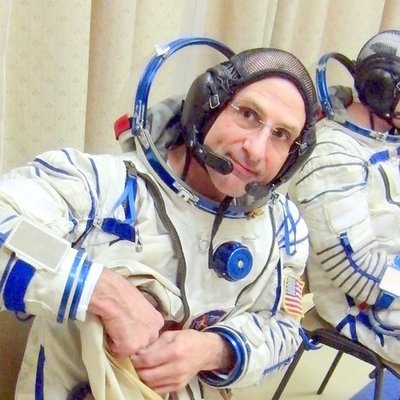
Many have asked how this photo was made. This is my explanation.
The ISS rotates about its pitch axis as it orbits Earth at 17,000mph to keep its nadir view constant. Because of this long exposure photography turns stars into arced lines.
Sidereal clock drives on Earth match the planet's rotation to see stars clearly. I knew one designed for space could do this too.
So a camera mount was custom built at @RITtigers to rotate once every 90 minutes using a 60 to 90 toothed gear system, cancelling out the orbital motion of ISS and allowing the capture of distant stars as fixed points!
In essence, it is a a rotational coil spring powered analog star tracker. It was machined out of aluminum and is entirely mechanical to bypass NASA's strict electrical requirements for cargo. We had to get creative!
After Expedition 72 it was safely returned to Earth and is to be displayed at RIT. Which I am pleased to say because a similar barn door tracker I made from spare parts on Expedition 6 for nighttime city photography was destroyed in an atmospheric trash disposal!
Photography is an important part of sharing the journey to new frontiers for all people of Earth!
显示更多
