与「dreamer」相关的搜索结果
dreamer 贴吧
一个关键词就是一个贴吧,路径全站唯一。
用户
未找到
包含 dreamer 的内容


Goood dayy everyyone.☀️💙
One day we'll look back at these days and smile.
We'll remember who kept building, who kept believing, and who never gave up on apex huntress
Markets change. Conviction doesn't.
To every builder, collector, and dreamer still here see you at the top. 🚀
显示更多


AI Is Moving Beyond “Generating Videos” — Toward “Generating Worlds”
Over the past two years, AI video models have advanced at an astonishing pace.
From Runway and Pika to Sora and Veo, AI-generated videos have become increasingly realistic and more consistent with the physical laws of the real world.
Many people believe the next objective is simply to generate videos that are longer, sharper, and more lifelike.
But if we take a step back, we can see that the real transformation is not happening in video itself.
It is happening in world models.
What Is a World Model?
In 1943, psychologist Kenneth Craik proposed an idea that would influence artificial intelligence research for decades.
He argued that the human brain does not merely react to the outside world. Instead, it maintains an internal model of how the world works.
Because we have this internal model, we can predict the outcome of an action before we actually take it.
Before crossing a road, we estimate whether a car will pass by.
Before catching a ball, we predict its trajectory.
These abilities come from continuously simulating the world in our minds, rather than relying entirely on trial and error.
This idea later became known by a more formal term:
World Model.
A world model does not describe a single image or a fixed video clip.
It is an internal representation capable of continuously simulating the rules and dynamics of the real world.
Why Is AI Research Turning Toward World Models?
Because predicting “what comes next” is becoming increasingly central to how AI systems work.
Language models predict the next token.
Image models predict the next step in the denoising process.
Video models predict the next frame.
A world model, however, attempts to predict something broader:
What should the world look like in the next moment?
In 2018, David Ha and Jürgen Schmidhuber proposed in their paper World Models that an intelligent agent could first learn a model of the world, and then use that internal model to plan its actions.
The Dreamer series later demonstrated that many complex tasks could be learned by training agents inside an “imagined world.”
At the same time, the development of video models such as Sora and Veo led researchers to another realization:
A model capable of continuously generating video has already learned, at least implicitly, many of the rules governing the real world.
As a result, these two research directions have gradually begun to converge.
But Video Is Not Yet a World
This is where the distinction is often misunderstood.
For a world model to support meaningful real-time interaction, it must solve several critical problems.
Most video models today are essentially answering one question:
What should the next frame look like?
A true world model needs to answer much more:
What happens if I take one step forward?
If I walk behind a building and then return, will the building still be there?
If I suddenly change the camera angle, will the entire space remain consistent?
If I enter a command such as:
“Summon a dragon.”
Will the world respond immediately?
In other words, a world model must do more than generate content.
It must understand space.
It must understand time.
It must understand causality.
And it must understand interaction.
Moving from watching to participating is where the real difficulty of world models begins.
World Models Are Entering the Interactive Era
One of the latest attempts in this direction is Alaya World, recently open-sourced by Alaya World, or @alayastd.
Instead of generating a fixed video clip, it generates a world that users can explore in real time.
Users can begin with text, an image, or a video, enter the generated scene, move freely through it, and introduce new prompts at any moment during generation.
The world responds immediately.
According to the publicly released information, Alaya World provides:
Real-time streaming generation at 720p and 24 FPS
Stable continuous exploration for more than one minute
The ability to switch prompts and trigger skills or events during generation
Model weights and inference code released under the Apache 2.0 License
Training code and datasets planned for future release
What makes these capabilities important is not simply the technical specifications.
It is that the generated “world” can now support continuous interaction.
The official demo shows that users can genuinely control, transform, and explore the generated environment.
AI Is Evolving From a Tool Into an Environment
Over the past few years, most discussions around AI have focused on content generation.
Generating text.
Generating images.
Generating videos.
But world models raise a fundamentally different question:
Can AI generate an environment that people can inhabit, explore, and continuously evolve?
If the answer is yes, the impact will extend far beyond video generation.
Game development, robotics training, embodied intelligence, digital twins, virtual production, and many other fields could be transformed by the development of world models.
World models are still at a very early stage.
Yet from Craik’s proposal of an internal mental model more than eighty years ago to the emergence of today’s interactive world-generation systems, a clear evolutionary path is beginning to take shape.
Perhaps what AI is ultimately learning has never been limited to images, videos, or language.
Perhaps it is learning the world itself.
References
GitHub:
Technical Report:
显示更多


From one Canadian dreamer to another 🇨🇦
FANchise | @SeatGeek


Happy Father’s Day to all the dads and grandfathers out there helping inspire and prepare the explorers, builders, and dreamers of tomorrow. The future Starfleet is going to need a lot of recruits!
显示更多


With his crystal-clear voice, Luo Yizhou captures the passion and tenderness unique to youth, singing the spirit of striving for excellence on the #DragonBoatFestival# straight into the hearts of every dreamer. Stay tuned on June 18th, #2026AdventuresonDragonBoatFestival#
显示更多


From “It’s standing up!” to the brink of history, what a journey. 🚀🚀
That raw, unforgettable video of Elon Musk in mission control, eyes wide, voice cracking with pure awe: “It’s standing up… Holy smokes, man!”, captures the exact moment everything changed. December 21, 2015. The first successful Falcon 9 booster landing. A feat many called impossible.
Back then, reusable rockets were a dream. Failures piled up. Skeptics laughed. But that single, perfect touchdown on Landing Zone 1 didn’t just save a booster, it ignited a revolution. Launch costs plummeted. Cadence exploded. Starlink connected the world. NASA crews flew safely. And the road to Mars became real.
Fast forward to today. Hundreds of landings later. Night landings on drone ships. Boosters flying dozens of times. Starship catching towers. And now, SpaceX stands on the cusp of its historic IPO, set to debut as one of the largest in history, valuing the dream at over a trillion dollars.
This isn’t just about rockets or stock prices. It’s about belief. About a team that kept iterating through explosions, setbacks, and doubt. About Elon and every engineer, technician, and dreamer at SpaceX who refused to accept “that’s how it’s always been done.
From that magic moment in 2015 to this milestone today, congratulations, @SpaceX. To @elonmusk, the entire team, and everyone who believed.
The future isn’t coming. SpaceX is building it, booster by booster.
What an inspiration!
显示更多


Why Most CIOs Are Quietly Praying for Retirement — And the Few Who Aren’t Are About to Get Very Rich
I had a moment this week where I was sitting across from a Director of IT and it hit me — this poor bastard has the toughest job in the entire company. The business folks get to be full-time dreamers: “Hey, can we automate this? Can the AI just know what to do? Can it walk my dog while I’m in this meeting?”
Meanwhile he’s over there thinking about data security, system reliability, whether some employee is gonna click on an email that says “You’ve won a $1,000 Walmart gift card!”, whether Ukrainian hackers are going to steal their customer data at 2 a.m., and whether his entire team is about to get replaced by three interns and ChatGPT — all while knowing none of this stuff actually works the way the brochures promised.
And here’s the part that makes me feel for the guy — for his entire career he’s been rewarded for keeping the machines running and not getting fired. Now we’re asking him to suddenly become a profit center, to be out over his skis with AI initiatives. It’s like telling the hall monitor he’s now responsible for running the company’s underground poker game. Did I just compare our AI software to an underground poker game? Yeah, probably not the best analogy, but hang with me here, I’m rolling.
Meanwhile the C-suite is over there wondering why nothing’s happened yet, completely oblivious to the fact that they’ve spent twenty years brutally punishing IT for not playing defense. Hell, I know CIOs who got fired because Windows 95 sucked.
The real kicker is how to even get started. Our philosophy has always been to start small — automate one workflow, prove it works, and then compound fast. Smart in theory. In practice, with a big organization, that feels like bringing a birthday candle to a forest fire.
The C-suite doesn’t get excited about incremental. They want to see something that actually moves the needle. So you’re stuck trying to thread this ridiculous gap: build something small enough to actually work, get real user adoption, and make sure the vendor isn’t full of shit.
Honestly, I don’t envy that seat one bit. At Collide, we’re committed to being real partners with the folks actually doing the building. I’ve got serious scar tissue from getting fired for not being “openly collaborative” with other oil and gas companies on well spacing back in the shale days, and I’m never making that mistake again. We’re gonna share what we learn, educate when we can, and actually listen — God knows we have a lot to learn too.
Truth is, my tech guys are dying to find some partners in crime — and I really gotta stop with the crime analogies, I swear that’s not what we’re doing here — because they get all excited explaining the latest and greatest AI breakthrough and I respond with the technical sophistication of a man asking if his rotary phone has Bluetooth.
Sip slowly, my friends.
显示更多

Years ago, Elon Musk sat on a stage and pointed to the largest flying object humanity had ever conceived.
And he called it a rowboat.
Elon Musk: “The future spacecraft will make this look like a rowboat. The future spaceships will be truly enormous.”
He wasn’t describing ambition.
He was describing a unit of measurement.
The interviewer asked what it could carry.
Musk: “This can take a fully loaded 747 with maximum fuel, maximum passengers, maximum cargo… this can take it as cargo.”
The 747 took decades and the full weight of Boeing’s engineering empire to perfect.
Musk looked at it and saw a suitcase.
Not a rival. Not a benchmark. A thing you put inside the real thing.
That is not confidence. That is a completely different relationship with scale.
Then came the timeline.
The interviewer assumed twenty to thirty years.
Musk said eight to ten.
Nobody blinked.
That is what dismissal looks like in real time. Not pushback. Just the quiet assumption that the number isn’t serious. Because the human brain is linear. We project the next decade by copying the last one.
Musk was reading a manufacturing curve most people in that room didn’t know existed.
The disbelief was not skepticism. It was a biological limitation.
We just watched a 232-foot booster fall from space and land between a pair of mechanical arms on its first attempt.
The rowboat is being built in real time.
Most people misread the gap. It is not between dreamers and doers. Every founder “does.”
The gap is between people who set a deadline and people who set a deadline and then wager everything they have that the laws of physics will cooperate with the calendar.
Most visionaries paint the picture and wait for the world to catch up.
Musk pours the concrete before the permits arrive.
For a decade, the timeline was mocked. The physics were questioned. The ambition was called delusional.
And step by step, fireball by fireball, the steel got taller.
Every generation builds something it considers a miracle.
And every generation that follows quietly loads that miracle into its cargo bay and barely notices the weight.
That is how civilizations actually move. Not in straight lines. In phase shifts.
And the people who trigger them always look insane right up until the moment they don’t.
He told us exactly what he was going to build.
Then he built it.
显示更多

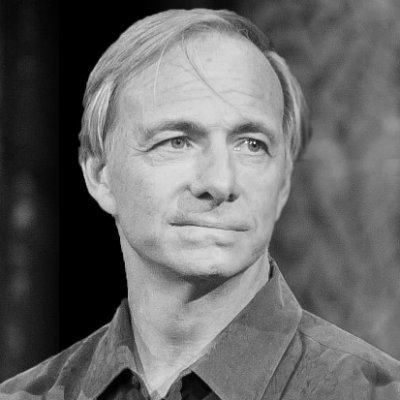
Understanding, accepting, and working with reality is both practical and beautiful. I have become so much of a hyperrealist that I’ve learned to appreciate the beauty of all realities, even harsh ones, and have come to despise impractical idealism.
Don’t get me wrong: I believe in making dreams happen. To me, there’s nothing better in life than doing that. The pursuit of dreams is what gives life its flavor. My point is that people who create great things aren’t idle dreamers: They are totally grounded in reality. Being hyperrealistic will help you choose your dreams wisely and then achieve them.
By interacting with my digital twin, you can evaluate your own decision-making processes and evolve your approach in real-time. The faster you evolve, the faster your results will follow. Click the link below/in my bio to start our comversation now. #principleoftheday#
显示更多
