与「NETFLIX」相关的搜索结果
NETFLIX 贴吧
一个关键词就是一个贴吧,路径全站唯一。
用户
未找到
包含 NETFLIX 的内容
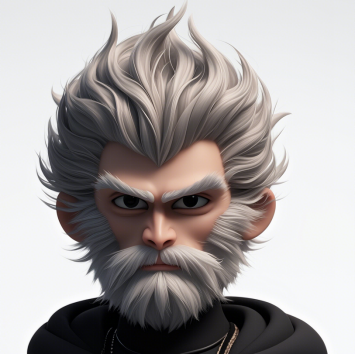
🚨 Netflix 花 500 万美元制作一集动画!
一个 21 岁的人上个月花了 124 美元,收入 2,342 美元
一小时一集,六个工具,一个人,一样的结果。
睡着了,钱还在进来
【附操作步骤】
显示更多


爱奇艺从四十多U跌倒一U不到,太牛逼了,还有比他更耻辱的中概股吗。
长视频平台最核心的资产,并不是什么片库和片源(毕竟中国盗版猖獗),而是愿意持续付费的会员。
结果这傻逼爱奇艺的逻辑是这样的:你买了会员说明你付费意愿强,那就再搞个超前点播,热门内容再单独收费,把人当狗耍,
46美元的时候他本可以做中国版netflix的,现在变成一家赌博公司,必须赌自己不停押中下一部爆款。
爱奇艺已经陷入了一个几乎无解的三角,
想增加会员收入,就得加大内容投入;
想提高利润,就得减少内容投入;
内容投入一减少,会员和广告收入又会下降。
不说完全凉透,但已经回不去当年的叙事了,可能公司还能苟延残喘,但是股东曾经购买的成长故事已经死透了。
显示更多


这个开源项目系统整理了 35 家 AI 公司的 AI 工程师面试题,全部来自 “公开报告的面试经历”
来自 @outcome_school 团队 @pallavishekhar_ 开源发布,内容几乎涵盖了 OpenAI、Anthropic、DeepMind、xAI、DeepSeek、Kimi、GLM 等 AI Labs,Cursor、Cognition、ElevenLabs 等 AI Native 团队和 Nvidia、Microsoft、Amazon、Apple 等头部大厂。
覆盖的岗位头衔也非常多:AI Engineer、LLM Engineer、Gen AI Engineer、ML Engineer、Research Engineer、Applied Scientist、FDE、MLOps/LLMOps 工程师等。
开源地址:
# 内容架构:一个精心设计的双层结构
第一层:跨公司通用题(Common Questions)。
作者把在多家公司反复出现的题目只列一次,标注"Asked at"哪些公司,按十大主题组织:
1. LLM 内部机制与架构 — attention 缩放因子、KV cache 内存公式推导、MQA/GQA/MLA、FlashAttention、BPE、RoPE/YaRN、Chinchilla scaling laws、MoE、解码采样策略、lost-in-the-middle、RMSNorm、SwiGLU
2. 推理、服务与 GPU 性能 — prefill vs decode、continuous batching、PagedAttention、投机解码、量化(FP16→FP4)、五种并行策略、TTFT/TPOT 指标、H100 上的 roofline 计算、vLLM/SGLang/TensorRT-LLM 选型、“如何把服务成本降 10 倍”
3. RAG 与检索 — 分块策略、BM25 vs 稠密检索、重排序器、HyDE、权限感知检索、ANN 索引、索引新鲜度、答案归因
4. Agent 与工具调用 — ReAct、MCP、工具 schema 设计、多智能体编排、Agent 记忆、循环终止条件、人类审批
5. 微调与对齐 — RLHF/DPO/GRPO/RLVR 全谱系、LoRA/QLoRA 数学、灾难性遗忘、“提示 vs RAG vs 微调”决策框架、蒸馏、reward hacking
6. 评估与可观测性 — LLM-as-judge 及其偏差、幻觉检测、基准污染、Agent 评估、回归门禁
7. 安全与负责任 AI — 提示注入(直接/间接)、OWASP LLM Top 10、护栏、Constitutional AI、红队
8. 多模态与语音 — VLM、语音 Agent 延迟预算、barge-in 打断处理、级联 vs 端到端语音、ASR/TTS 评估
9. AI 系统设计 — 十类高频设计题(千万级文档企业 RAG、代码助手、客服 Agent、Text-to-SQL、LLM 网关、数亿用户聊天服务等)
10. 编码题 — 从零实现 attention、KV cache、BPE、采样;LRU 缓存、令牌桶限流器、异步批处理器、SSE 流解析器、最小 Agent 循环
第二层:35 家公司的专属章节,分为五大梯队:
1. 前沿实验室(12 家):Anthropic、OpenAI、Google DeepMind、Meta、xAI、Mistral、Cohere、DeepSeek、月之暗面(Kimi)、智谱(GLM)、阿里(Qwen)、Sarvam AI(印度)
2. 大厂 AI 组织:Microsoft、Amazon、Apple、NVIDIA、Tesla,以及一组消费级 ML 公司(Uber/Netflix/LinkedIn/Airbnb/Pinterest/Spotify)
3. AI 基础设施公司:Databricks、Groq、Together AI、Hugging Face、Scale AI、Perplexity
4. AI 原生产品公司:Cursor、Cognition(Devin)、Sierra、Harvey(法律)、Glean、 AI(机器人)、Waymo
5. 前向部署/企业 AI:Palantir
# 题目分布透露的行业信号同样值得关注
1. 公司的差异化考察方向,和它的商业模式严丝合缝。 这是最能体现整理功力的地方:
· DeepSeek、月之暗面、智谱、Qwen 的题目深度绑定自家论文——MLA、auxiliary-loss-free 负载均衡、Multi-Token Prediction、MuonClip、DualPipe、长上下文扩展、GLM 的 thinking 模式。面试这些公司等于面试它们的论文,还要求 PyTorch 从零实现 MoE 路由。
· Groq 的题全是 SRAM-only 架构下的 roofline 重推演:“没有 HBM,decode 的 roofline 论证哪里变了”、“确定性在 p99 层面到底买到什么”。
· Apple 清一色端侧:3B 模型在手机上跑、PTQ vs QAT、不采集用户内容的前提下用设备信号改进模型、30+ 语言区无法记录用户内容的评估方案。
· CharacterAI 是推理经济学:“我们的服务成本被 KV cache 而非权重主导,降一个数量级,代价是什么”。
· Harvey(法律)和 Abridge(医疗) 考的是领域约束下的工程:200 页信贷协议里第 140 页的条款依赖第 8 页的定义术语怎么检索、生成的病历中出现了患者没提过的药怎么当作安全事故处理、PHI 如何约束整个架构。
· Palantir 的招牌是 "decomposition" 轮:把“一家货运铁路公司每年因机车非计划停机损失数千万”分解成工程计划。
2. 编码轮的形态正在发生实质性变化。 文档里反复出现的一类题,与传统 LeetCode 明显不同:
· “实现一个内存 KV 存储:先 SET/GET/DELETE,再加事务 BEGIN/COMMIT/ROLLBACK,包括嵌套事务”(OpenAI、xAI 都问)
· “给你一个 LLM 推理引擎的调度器类,其中一个方法是空壳,没有规格没有文档。说说你头三十分钟干什么”(xAI)
“重构这 120 行能跑但很乱的代码,不许破坏测试”(OpenAI)
· “对 5 万个文档跑 LLM 调用,API 限 100 并发、偶发 429 和超时,把 Python 写出来”(Anthropic)
考察重心从算法记忆转向增量需求下的代码演进能力、并发正确性、真实工程约束下的取舍。
3. “AI 协作轮”作为新题型已经进入正式面试流程。 这是文档里最前沿的信号:
· Anthropic 部分机器学习岗有 AI-collaboration 轮:现场给你 Claude,考察的是你如何指挥它和验证它的产出,而不是你自己写。
· Meta 2026 年的流程新增三阶段 AI 辅助编码轮(探索修复 → 实现新功能 → 扩展改进)。
· Cursor 的 onsite 是两天在真实 Cursor 代码库上做一个功能(或 8 小时远程版),明确考核你对 AI 工具的使用效率和自主 scoping 能力。
· Sierra 给你两小时和任意 AI 工具,看你选择做什么。
xAI 有四小时限时产品构建。
4. FDE 成为一级岗位类别。 Anthropic、OpenAI、Databricks、Scale、Together、Sierra、Harvey、ElevenLabs、Palantir 的章节里都有 "Applied and Forward-Deployed Scenarios" 专属题库——典型题目如“企业客户说 Claude 幻觉太多,你是驻场工程师,头 48 小时做什么”。这对应了 AI 公司向企业交付方式的转变:模型能力差距收窄后,落地能力成为差异化。
5. 硬核系统题的普及。 "H100 上 70B 模型 batch size 1 的 roofline 计算"、"估算 70B 模型的 GPU 显存(权重 + KV cache + 激活 + 碎片)"、"p99 延迟在部署后翻倍但模型没变,走一遍诊断”——这类题横跨 NVIDIA、Together、OpenAI、Perplexity 等多家,说明推理性能的量化直觉已成为 AI 工程师的通用素养,而非基础设施工程师的专属。
显示更多


Nike跌了78%,Chipotle跌了52%,Constellation跌了55%。
这些不是什么垃圾股,是美国消费的门面。
沃尔玛距高点跌了18%,好市多跌17%,麦当劳跌30%,家得宝跌27%,从超市到快餐到家装,全线回撤。
Netflix跌42%,Uber跌30%,Booking跌32%。消费者连娱乐和出行都在砍。
百事跌25%,星座品牌跌55%,连可乐和啤酒都卖不动了,说明不是某个行业的问题,是整个消费在收缩。
这些公司有一个共同点:它们的收入直接来自美国普通消费者的口袋。当这些股票集体下跌的时候,传递的信号只有一个,美国人开始收紧钱包了。
标普还在创新高,但撑起指数的是AI和科技。消费股已经在用股价告诉你,实体经济的压力比指数显示的要大得多。
不过反过来想,这些公司的生意并没有消失。
沃尔玛、好市多、麦当劳,美国人总要吃饭购物,当恐慌把价格砸下来的时候,也许正是值得关注的时候。
显示更多


The World is Changing: AI For Creativity
By Jeffrey Katzenberg
A few months ago, I sat in my office in Silicon Valley and watched as a tech founder showed me something extraordinary. On the screen was a fully realized, beautifully lit, well-composed animated scene. It was stunning and it made me feel exactly what I felt in 1986 watching Luxo Jr. That was the first time I watched a computer-animated 3D character take a breath and seem, against all reason, to have life. It left me in awe.
Later that day, I received a text from an artist I've known for thirty years, 350 miles to the south, in the city where I spent most of my career. After seeing a similar video, she texted: "Is this the end of us?" My answer was, "Certainly not.”
I have spent the better part of the last decade in Silicon Valley, but the heart of my career has been in Hollywood. Being deeply connected to both worlds means I have deep loyalties to each and a responsibility to speak honestly to both.
In 2023, I said that these new AI tools would cut the time and cost of producing world-class animation by as much as ninety percent within three years. Some colleagues were alarmed, many were furious.
There is growing fear and resistance surrounding AI within the creative community. I deeply understand it, because I've spent countless hours walking through animation studios watching gifted artists bent over their desks, rebuilding a single second of film for the tenth time because the ninth version wasn't quite right. I've sat in screening rooms where four years of people's labor played out in minutes, and I knew the name of every person that had spent countless hours bringing those images to life. The creative process is a calling, there's really no other way to describe it. From the outside some see resistance. From the inside, it is love.
People do not fight this hard for things they don't care about. The pushback coming out of Hollywood represents the collective effort of people who are deeply passionate about their craft.
Is History Repeating Itself?
The history here is more complicated than either side may realize. In 1906, the most famous composer in America, John Philip Sousa, published an essay titled “The Menace of Mechanical Music." He warned that the phonograph would become "a substitute for human skill, intelligence and soul."
Sousa's fight was not really about the machine, it was about money. The machines were playing his compositions, and the men who built them weren't paying him a cent. His campaign helped create the Copyright Act of 1909. He did not stop the technology. He changed the terms under which it could use his work.
A hundred years ago, sound came to the movies. We remember it now as a miracle, and it was. What we forget is who paid for it. Before sound, tens of thousands of musicians made their living in the orchestra pits of movie houses, scoring every film live, every night, in towns all over the world. When the soundtrack arrived, the work of one composer and one orchestra was recorded for a film that went into thousands of theaters. The union fought back with everything it had, taking out newspaper ads across the country warning against the menace of "canned music," one of them showing a mechanical man tearing the strings out of a harp while an angel wept.
They were not fools, and they were not Luddites. They were right. Those pit jobs did not come back. And yet (this is the part we have to be brave enough to admit), sound gave us the movie musical, the modern score, sfx, sound design, audio engineering, and an art form vastly larger than the one it disrupted. And it helped keep Hollywood in the forefront of world entertainment for the rest of the century and into the next. The loss was real. And yet the art form expanded.
This is a story that has been told over and over again. To resist technology is to risk irrelevance. Just look at Kodak or Blockbuster. To embrace technology is to open doors of new possibility. Just consider Apple and Netflix.
What I Learned From Walt Disney
In the mid-1980s, I was tapped to lead Disney's animation division at a moment when the studio was at an inflection point. Animation wasn't just another business unit. It was the soul of the company, a medium revered because of Walt's genius and his passion. But the production system was cumbersome and unforgiving. A single movie was 125,000 individual hand-drawn and painted cels, photographed one frame at a time. Every revision carried a cost measured in months. These degrees of difficulty shaped the kinds of stories we could tell.
We found our way forward in an unexpected place: Walt himself. The Disney archives held astonishing recordings of Walt explaining his creative process. His own writings. His notes and storyboards. Work product captured at every stage of his process. This was truly a gift. Listening, reading, sitting with the work itself, we heard him talk about character, about emotion, about how an audience feels when a character truly comes alive. He talked about making bold choices and refining a scene until it genuinely moved people. We didn't hear a word about pencils or paintbrushes. In fact, Walt was famous for being a technologist, forever hunting for state-of-the-art tools, often inventing them himself to achieve the images he saw in his head. But he never defined animation by the tools. He defined it by whether the audience believed the character. His principles were timeless. The tools were not.
That realization changed everything. We co-developed the Computer Animation Production System (CAPS) with a young Northern California company called Pixar, replacing hand-painted cels with CGI. In The Little Mermaid, the final scene shimmered with a dimensionality and light that the old process simply couldn't achieve. In Beauty and the Beast, the ballroom sequence moved with a cinematic sweep that placed the audience inside the emotion of the moment. In Aladdin, the Cave of Wonders felt vast and alive, and the Magic Carpet became an intricate, compelling character all its own. In The Lion King, the stampede carried a scale and intensity that raised the emotional stakes beyond anything we'd done before. Technology didn't diminish the craft, it expanded the canvas. It gave artists more room to create.
A decade later, the canvas expanded again. When Disney released Pixar's Toy Story, it wasn't simply a technical milestone. It was proof that a fully computer-animated film could carry real emotional weight, that it could make audiences laugh, cry, and believe. At DreamWorks, we made the difficult decision to sunset hand-drawn animation and become a fully computer-animated studio. It was the right thing to do, but it was not without pain. It cost talented people their place in an industry where they had worked their whole lives. Some made the leap to the new tools and did the finest work of their careers. Some never did.
Tools are never the point. The instruments change with every generation. What endures is taste and imagination. The magical ability to make an audience feel. One of the greatest storytellers of our generation, George Lucas, succinctly captured the eternal essence of this issue: “It’s not the how, it’s the why.”
A Distinction With a Difference
I asked one of the leading AI models a question that has been challenging me for months. What is the difference between reasoning and creating? Its answer changed how I think about almost everything happening in this industry. It said . . .
Reasoning and creating are two distinct cognitive modes, though they also work together. Reasoning is fundamentally evaluative and analytical. It operates on what already exists: facts, premises, evidence. It moves toward a conclusion that was in a sense already implied by the input. Reasoning is constrained by logic and truth. Its goal is to arrive somewhere correct, not to invent somewhere new.
Creating is fundamentally generative. It produces something that didn't exist before. And crucially, there's no single right answer waiting to be found. A blank page has infinite valid responses. Creation involves choices that can't be fully justified by logic alone. Taste, intuition and vision fill the gap where deduction runs out.
Reasoning is what Silicon Valley has been perfecting. Creating is what Hollywood has been practicing for more than a century. AI today operates almost entirely on the reasoning side of the line. It can deduce, evaluate, optimize, and pattern-match brilliantly. And while it can create, there is a real distinction to being creative. What it doesn’t yet have is those things that make us human: empathy, devotion, serendipity, the kind of creativity that comes from a person trying to say something only they could say. When the bot generates a piece of art, it is not trying to communicate anything. It is statistics, not soul; it is emulating things that have been done. By contrast, human creativity isn’t about repeating patterns of zeros and ones; it is about doing something new.
One day, AI may close this gap. Three years ago, the leaders building AI would have called what they are achieving today, improbable, if not impossible. Impossible is no longer improbable.
Today, the line between reasoning and creating is real. Even the leading technologists acknowledge we are not there yet. There is no scientific path to crossing this divide that anyone in the field can articulate today. Understanding that gap is where we will find common ground.
A Path Forward
In 2016, I closed one chapter in Hollywood with the sale of DreamWorks and opened another in Northern California, co-founding WndrCo. We’ve backed more than 50 founders building the next generation of technology and watched how breakthroughs in Silicon Valley emerge, first as experiments, then as platforms, and finally as infrastructure that reshapes entire industries. It's worth remembering that the last great revolution in animation also came from the north. Pixar was a Northern California company, forged not in the conventions of the Hollywood studio system, but in the technological breakthroughs of Silicon Valley. I've spent years on both sides of this bridge. For sure, I don’t have all the answers (take Quibi, for one!). But, from my past and present vantage points of my long career, here is what I see . . .
Brilliant people in Northern California building this technology have made something extraordinary. They have earned the right for the rest of us to be, if not believers, at least optimistic that what comes next will be remarkable. But they have not made an artist. The tools are powerful, but they are not what makes a story matter. That knowledge lives 350 miles to the south, inside people whose life's work has informed the very models you are building. The right path forward includes them by design, with credit, with consent, and with compensation. Build this with the storytellers. Not on top of them. Taste is not something that can be synthesized, it is uniquely human.
At the same time, Hollywood needs to accept that AI is not going away. The energy they are spending trying to make it disappear is energy they are not spending deciding the terms on which it will exist. And the terms are everything. The north needs something from it that they cannot build and cannot buy: creativity. The kind that takes a blank page and conjures a single right answer where there was none and has held audiences for a century. Without it, the most powerful reasoning engine ever invented will still be missing the only thing that makes a story worth telling.
The artists who learn to wield these new instruments will do things the engineers never dreamed of. They always have. Edison invented the motion picture but made terrible movies. It took Chaplin, Lloyd, Keaton and so many others to make movies emotional. Now, the canvas is about to expand yet again. We should decide now that we intend to paint on it.
There are so many valuable lessons in history. This has happened many times before, and it was never settled by the technology. It was settled by the terms. Sousa did not stop the phonograph; he helped write the law that made sure composers got paid. And two years ago, when the writers and the actors walked out, they were fighting for the very things Sousa was fighting for in 1906. Consent, compensation, the basic recognition that human creative work has a price that must be paid. The terms of that fight are still being negotiated, but the principle is older than any of us.
The tools-versus-no-tools argument is a trap. First, we must all agree that there should be terms. Then we can have the crucial debate about what fairness requires.
What I Learned From Steve Jobs
Years ago, Steve Jobs said, "It's in Apple's DNA that technology alone is not enough. It's technology married with the liberal arts, married with the humanities, that yields us the result that makes our hearts sing." He was describing a device. But he could just as easily have been describing this tale of two cities.
What I See Coming Soon
As the barriers and the costs come down, more films will get made, not fewer. Studios will get to take more risks. There will be more seats at the table, and very soon entirely new forms of storytelling. In the 1980s, animation was dismissed as a niche corner of the business. Today it is one of the most beloved and profitable forms of storytelling in the world. In live action, filmmakers like Steven Spielberg, James Cameron and Peter Jackson embraced new visual tools not as shortcuts, but as instruments, and expanded cinema in the process. Every time storytelling has met a genuine technological shift, from synchronized sound to color to computer animation, it has redefined the boundaries of the medium and grown larger in the process.
Assuredly, I don’t have all the answers, but I am confident that the creative opportunities will expand yet again. How we come through this is a choice. The north has the new tools. The south has the creative soul. The best future will draw on the best of both worlds.
显示更多


Picked up a new accent from down under 😂
📺: Netflix

With love, from Dub City.
📺: Netflix


Fred Warner is out here MAKING PLAYS 😤
SFvsLAR on Netflix
