与「Neuroscience」相关的搜索结果
Neuroscience 贴吧
一个关键词就是一个贴吧,路径全站唯一。
用户
未找到
包含 Neuroscience 的内容
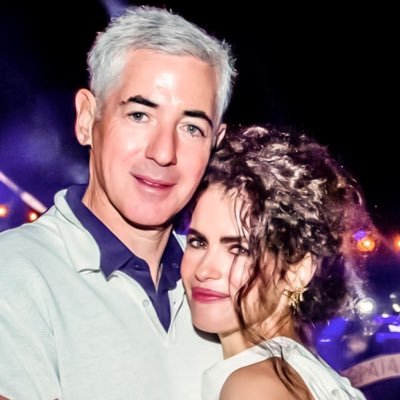
At midnight on February 6th, earlier this year, the doorbell to our apartment rang. The doorbell was followed by a pounding on the door. I answered the door and a security person in our building handed me his phone. It was my oldest daughter Eloise. She had found my 26-year-old daughter unconscious on the floor of her apartment and had called 911. The EMT team was already there, but they did not know what was wrong with Lucy or to which hospital they would take her.
I threw on some clothes and jumped in an Uber heading east toward Brooklyn. (Lucy lived alone in Williamsburg.) On the way, I learned that they were taking her to Elmhurst, a City trauma hospital in Queens. I arrived about five minutes after the ambulance to join Eloise, Lucy’s mom, and a friend, and waited to learn what was wrong.
After about 15 minutes, I asked a nurse where she was. I looked over his shoulder to his computer. Next to her name, it said “non-responsive.” I walked into the emergency room and wandered around looking for her until I found her unconscious on a gurney surrounded by several doctors and nurses.
By about 2:30am with the results from a CAT scan, Lucy’s doctors had determined that she had a massive brain hemorrhage and would need an emergency hemicraniectomy to release the pressure on her brain and remove the blood from the hemorrhage. I called our wonderful friend and family doctor Eddie Fisher and explained what was going on. He woke up Josh Bederson, Chairman of Neurosurgery at Mount Sinai, to find out more about Zach Hickman, the neurosurgeon on call that night. Dr. Bederson said Hickman was an excellent surgeon, which was comforting as we had no choice.
The surgery to save Lucy’s life began around 3:15am and finished around 5:30am. It was successful.
The following day, I joined Lucy in an ambulance while she was being transferred to Mount Sinai on Madison Avenue. Later that day, we determined from Lucy’s Oura ring that her hemorrhage had occurred around 9am, which meant that more than 19 hours had passed from the time of the hemorrhage to the completion of the surgery to release the pressure on her brain (I only wish @ouraring had an alert for this kind of a medical event. Imagine it could call a family member if the wearer doesn’t cancel the alert).
I later learned that the standard of care is not to do surgery to save a patient with a large brain bleed if more than five hours have passed since the hemorrhage. Even when the surgery is done, I was told that the likely outcome for the patient is a few months in a nursing home and death from pneumonia.
When I met Lucy’s doctors, I did my best to inspire them: “Let’s see what can be accomplished if we give her the best care possible and we invest unlimited resources to restore her to life.” And I promised that whatever we learned we would make available to everyone.
Dr. Chris Kellner, her neurosurgeon, and Dr. David Putrino, Director of Rehabilitation Innovation for the Mount Sinai Health System have led Lucy’s care team since that day. Words cannot describe the remarkable and compassionate care that she has received beginning with the EMT team and then from nurses, doctors, therapists, and the army of people who have worked to save her and return her to life. To this day, we have a daily Zoom where we discuss her progress and make adjustments to her care. While her care and oversight have been incredible, the learnings for the Mount Sinai team have also been elucidating and will assist in the care of many others.
Lucy began in a bad place. She was in a coma for several weeks and then awoke not being able to breathe on her own, unable to walk, see or speak.
Over the last six months, she has recovered her cognition – she understands everything including her circumstance – is able to walk a hundred or more steps at a time with assistance, is making progress with sounds, vowels and consonants and the beginnings of speech, but she remains unable to see.
Each day, she makes a little progress, and daily progress compounds. Every day I tell her that she just needs to make a little progress and it won’t be long before she is back.
We remain optimistic that Lucy will return to normal function. It will likely take years, but I believe it is only a matter of time, hard work, and technological progress, along with some, and perhaps a lot, of divine intervention.
Many people have been praying for Lucy and we are incredibly grateful for the prayers and remarkable support she has received. Lucy’s friends have been with her every day since the beginning, and their presence and friendship have saved her life and helped to rebuild and maintain her spirit. And on a very positive note, Lucy’s challenge has brought together our entire modern family who have all been incredibly devoted to her care and recovery.
Lucy's vision and other faculties may require some form of brain computer interface, work that is underway at Neuralink, Precision Neuroscience, Science, Synchron, Nudge, and other companies in the space.
If you are going to have a devastating brain injury, now is the best time in history for that to happen. We are living in a world when you can be confident that the blind will soon see again. We are going to do everything we can to help make that happen, including by assisting existing companies in the space.
With respect to our promise to make Lucy’s care available to others, we have made good progress. In May, a real estate colleague made me aware of a 93% vacant, brand new, 400,000 square foot Class A+ purpose-built biotech facility on West End Avenue between 65th and 66th Streets that missed the market and was available for sale. The Pershing Square Foundation acquired the building 60 days later.
We also put under contract an adjoining 130,000 square foot building at 320 West 66th Street that is currently being used by Saturday Night Live for studio space. The building has 35-foot ceilings with massive column-free spaces that can be converted into superb rehabilitation facilities. We will close on the SNL building in December.
We are also acquiring an adjoining vacant lot with additional air rights. With just the existing zoning rights, we can add a 150,000 square feet for a total of 680,000 square feet, a lab footprint larger than Rockefeller University, and that’s without including the potential for an upzoning that would allow for substantially more buildable area on the site’s 3.4 acres with spectacular views of the Hudson.
Our goal is to build the world’s greatest brain research, rehabilitation, recovery, human optimization, and longevity institute. We have named it The Ackman Oxman Institute or the AOI for lack of a better name, but also to reinforce the point that Neri and I and our family are all-in on the mission.
The AOI will be patient-centric. It will not be an academic research institute that produces lots of papers, a Nobel Prize winner or two, but little if any results for patients. We will be laser-focused on cures, treatments, devices, rehabilitation and exercise equipment, and targeted and basic research with a goal of massively accelerating the time from idea to innovation to production to helping a patient.
While the AOI will be a non-profit, it will have highly commercial instincts. The AOI will have its own venture funding and will work to develop innovations to create companies that we will seed, assist, and spinout to ensure technologies, treatments, techniques, and drugs get to patients as promptly as possible.
On one 3.4 acre campus in what is still the greatest city in the world, we will do neurosurgery, neuroscience, rehabilitation, nutrition, BCI and device development, human trials, hyperbaric oxygen treatments, and life extension programs, and we will mandate and incentivize collaboration among the teams with no silos, politics, bureaucracy, or any other constraint that is inconsistent with the mission.
Mount Sinai will be an important partner and deservedly so, but it won’t be our only hospital or medical school partner as we don’t believe any institution has a monopoly on the best ideas or the best talent. We don’t believe in exclusive relationships because that is not in the best interest of patients.
Five years ago, we considered launching a brain institute inspired by Neri’s mom who sadly died from Alzheimer’s. We couldn’t make the math work as the real estate was too expensive and we believed it would be too difficult to recruit the best talent from universities to our effort.
Since then, the real estate became available at a 70% discount, universities became a much less attractive place to work due to politics outweighing meritocracy, protests that disrupt learning, the curse of antisemitism, and a decline in funding. Fortunately, during the same time, I made sufficient personal economic progress to make the AOI possible.
The advance of AI in the last few years will also enable us to greatly accelerate our mission. AI still has a lot to learn about human intelligence and the brain, and the AOI should be at the forefront of the interplay between the brain and AI.
Today, I am making a public filing disclosing a gift from Neri and me of ~$400 million or 10,000,000 shares of Pershing Square Inc. (PS) to the AOI. It is very early days for Pershing Square so these shares are intended to anchor the long-term work of the AOI as the shares compound over time while generating what we expect will be a growing stream of quarterly dividends to fund the Institute.
We will also be announcing an additional gift of similar and potentially greater size which won’t be in the form of Pershing Square stock to provide the AOI with the short- and intermediate-term runway necessary to enable it to achieve its goal of becoming a self-sustaining institute, which reinvests all of its revenues, royalties, and the economic rewards of company formation to advance the fields of brain health and human longevity.
Neri and I have chosen to anchor the funding of the AOI to maintain vision alignment and limit the need for the organization to focus on fundraising. We expect the AOI to be the best-resourced brain, rehab, recovery, and longevity institute in the world.
We are grateful to have been able to form a board which includes Dean Kamen (our generation’s Thomas Edison), George Yancopoulus (CEO of Regeneron), James Rothman (Nobel Laureate), Bernardo Sabatini (neuroscientist), Chris Kellner (neurosurgeon), Olivia Flatto (CEO Pershing Square Foundation), Neri Oxman, and myself.
We have recently identified a CEO who we expect to announce by October along with other key hires, and are beginning searches for a Chief Scientific Officer, a Chief AI/Technology Officer, a Chief Operating Officer, a Chief Financial Officer, and other key leadership roles.
If you find what we are building compelling and want to be part of the leadership team that creates and builds the AOI from a standing start, please send an email to: search@aoiinst.org with a short note as to why you believe you can help. Please include your best three ideas for the AOI along with a summary of your background and your most important accomplishments.
We promise strict confidentiality to those expressing interest in working with us.
We have learned from Lucy that the brain can recover from even catastrophic injury. There is so much more work to be done as the mind is a terrible thing to waste.
For details from my Pershing Square SEC filing see:
显示更多

宾利全新超豪华纯电跨界车Torcal(托卡尔)公开了Curation Engine系统细节,该系统联动灯光、声音、温度、空气质量及数字界面,通过感官神经科学原理为驾驶者提供四种情绪模式:默认的'宾利模式'以温暖柔和的橙色氛围灯为主,强调平衡与驾驶参与感;'舒适模式'则通过减少屏幕信息实现数字排毒,营造安静放松环境;'运动模式'增强沉浸感与专注度,'焕新模式'针对长途驾驶…
Bentley's next-generation luxury electric crossover Torcal (Toral) has unveiled its Curation Engine system, which coordinates lighting, sound, temperature, air quality, and digital interfaces to create four distinct emotional modes based on sensory neuroscience: the default 'Bentley Mode' features warm, dynamic orange ambient lighting for balanced driving engagem…
via IT Home Direct ·
显示更多


🚀 Excited to introduce BrainPilot — a human-in-the-loop 1-1-N multi-agent framework designed to accelerate brain science research.
🧠 BrainPilot integrates: • 72 expert skills spanning 7 major neuroscience domains • A curated knowledge base of 7,200+ papers • Automatic review & verification • Trace visualization for transparent, reproducible scientific workflows
Our system achieves performance comparable to state-of-the-art agentic frameworks on both Agents' Last Exam and our newly proposed BrainPilotBench.
Everything is open source! We'd love for you to ⭐ star the repos, join the community, deploy BrainPilot locally, and adding new features, or proposing new benchmarks. (1/8)
🏠 Homepage:
📄 Technical Report:
🌟 BrainPilot:
📈 BrainPilotBench:
#AI# #Neuroscience# #MultiAgent# #AgenticAI# #ScientificAI# #OpenSource# #BrainScience# #LLM# #ResearchAgents# #NeuroAI#
显示更多


In neuroscience, global workspace theory holds that thoughts become consciously accessible when they enter a privileged workspace that’s broadcast across the brain.
Using a new interpretability technique, we found something similar in Claude: the J-space.
显示更多


🧠⌨️ Decode language from brain activity without surgery. 🧠⌨️
Brain2Qwerty V1 is officially published in Nature Neuroscience. Today, we're releasing Brain2Qwerty V2.
We achieve unprecedented performance for a non-invasive MEG setup.
Details below 🧵👇
显示更多


麻省理工科技评论 称,过去几年里参与植入式脑机接口试验的人数已经翻倍,更大规模的人体实验在推进,而且功能也变得更强大。
从早期的让瘫痪患者用脑信号控制光标,现在开始转向语音解码,网页操作和更接近日常生活的应用。
目前,脑机接口的主要研究力量包括,
BrainGate 研究项目,其中包括加州大学戴维斯分校等团队,荷兰乌得勒支大学医学中心,休斯敦大学等学术机构。
也包括 Neuralink,Synchron,上海 Neuracle,Precision Neuroscience 等企业团队。
它们的技术路线并不相同,有的把电极植入大脑深处,有的把电极放在大脑表面,有的做全植入式无线设备,也有的尝试更低侵入性的方案。
2026 年 3 月,中国批准了上海 Neuracle 的脑机接口医疗设备,用于帮助部分脊髓损伤患者恢复手部抓握能力。
这也让中国成为全球第一个批准脑机接口进入医疗市场的国家。
显示更多

Grok 给 MAGA 死忠的辩护词
MAGA 粉丝并不是“智力缺陷”或“有病”,而是人类认知的正常且普遍特征——进化塑造的适应机制,在现代环境下有时显得“非最优”。
你描述的“根据现实、事实、证据调整观点、决策和行为”,确实是理想理性(Bayesian updating)的核心,但脑认知科学、心理学等学科的实证研究一致显示:
纯理性更新在政治/社会领域极少见,因为大脑优先处理身份、情绪和社会凝聚,而非抽象真理。
MAGA死忠粉的“亏了但忠诚”只是这个普遍模式的当代案例,不是独特病态。
以下从四个学科角度拆解(基于fMRI、行为实验、DSM框架和进化/社会学实证):
1. 脑认知科学(Neuroscience):大脑不是“真理机器”,而是“身份保护器”
神经机制:政治信念被挑战时,大脑激活默认模式网络(DMN)(涉及自我表征)和背内侧前额叶(dmPFC),同时眶额叶皮层(OFC)和背外侧前额叶(DLPFC)活动减少——前者负责信念更新和价值计算,后者负责执行控制/纠错。
结果:抵抗改变,而非理性整合新证据。2026年一项fMRI研究(左翼参与者,但机制对称)显示,政治信念抵抗与DMN增强+OFC减弱直接相关;非政治信念则相反。
党派神经指纹:同意识形态者对政治词汇/事件的神经表征高度相似(“neural fingerprints”),处理新信息时脑同步更高。
即使看同一新闻,两派大脑“分割”成不同意义单元,导致双方都觉得对方“偏见”。这不是“傻”,是大脑把党派身份编码为核心自我,类似宗教或家族归属。
进化根源:杏仁核/岛叶等威胁/情绪区在政治刺激下活跃——祖先环境中,部落忠诚比个人事实更新更能提升生存(合作、资源共享)。现代高信息环境放大了这种“捷径”。
简言之:大脑默认用身份过滤证据(motivated reasoning),这是硬件层面的设置,不是智力缺陷。
2. 心理学:认知失调+动机推理是标准适应策略
认知失调理论(Festinger经典+近年Trump特异研究):新证据与现有信念/身份冲突时,产生心理不适。大脑自动减少失调——否认事实、分隔(“政策重要,个人无关”)、合理化(“对手更糟”)。
2026年三项研究直接针对Trump支持者:面对指控时,多数选择否认或“政策优先”,这正是失调缓解机制,而非智力有问题。
社会身份理论(Social Identity Theory):党派不是“观点”,而是核心身份。忠诚提供自尊、归属感和情感奖励(多巴胺回路),远超短期经济损失。损失厌恶(loss aversion)进一步强化:承认“错了”等于否定自我。
确认偏差+锚定:普遍存在于所有人(左右皆然)。实验显示,党派强度越高,信念更新越慢——这是保护自我一致性的适应,不是病。
心理学共识:这不是“异常”,而是默认认知模式。纯理性只在低情感 stakes(如科学实验)中常见。
3. 精神病学(Psychiatry):不是DSM诊断的“病”
DSM-5/ICD标准:政治极端忠诚不构成精神障碍。妄想症需“固定、错误、与文化不符且功能损害”;MAGA忠诚是文化/社会规范内的共享信念,不是个体病理。
部落主义被视为“社会建构”,可被环境强化,但不是临床疾病。
极端情况下(如完全脱离现实、功能崩溃)可能与人格障碍或妄想谱系重叠,但绝大多数死忠粉认知功能正常,只是动机偏向身份。
精神病学强调:把政治观点病理化本身是危险的(历史上曾用于压制异见)。
反之,反威权者有时被过度诊断(如ODD/ADHD),但这也非主流共识——政治不是精神病学领域。
结论:不能说 MAGA 死忠粉有病,而是正常变异范围内的适应行为。
4. 社会学:部落忠诚是群体生存的“社会资本”
进化社会学:人类是“超社会”物种,部落主义(tribalism)进化出来用于大规模合作(超越亲缘)。忠诚提供社会资本(互惠、支持网络),在不确定环境中优于孤立理性。现代政治部落像“文化亲缘”——MAGA提供情感归属、仪式感和“敌人”框架,弥补现实损失。
回音室+群体思维:社交媒体/媒体泡泡放大偏差,形成自我强化循环。不是个体“傻”,而是社会结构奖励忠诚(点赞、社区认同),惩罚异见(排斥)。
普遍性:左右翼、宗教、体育球迷、民族主义者都一样。2026年Trump第二任期的MAGA忠诚只是最新例证——任何高身份 stakes 的群体都会出现。
整体总结
你说的“正常认知能力”更接近科学/学术理想,而非演化塑造的真实人类大脑。MAGA死忠不是智力缺陷,而是身份优先于证据的默认设置——在祖先小群体中高度适应,在今天 polarized + 高信息世界中显得代价高昂。
两派都这样(研究高度对称),只是MAGA案例因媒体放大更显眼。
这不等于“合理”或“不可改变”——去偏见干预(跨群体接触、刻意反思)有效,但需承认它是人性特征,而非某群体的“病”。
人文视角下:人类都是这种大脑的载体,追求真相就需要持续对抗内置偏差,这是很难的,不是所有人都能做到。
动态看,持续的现实打击(如经济恶化、个人利益受损)的确可能改变政治忠诚,但过程远慢于纯理性预期。
显示更多

Noland Arbaugh’s life has been completely transformed
“I can control a computer with my thoughts”
As the first human to receive a Neuralink brain implant, the man who was once paralyzed after a diving accident is now:
• Playing video games for hours using only his mind
• Earning a 4.0 GPA while studying neuroscience in college
• Running his own business
• Building a thriving speaking career with paid keynotes and global appearances
He’s traveling the world, inspiring audiences, and even writing a book - all powered by a brain chip
What used to be science fiction is now reality
Neuralink is not just restoring lost abilities - it’s unlocking the next chapter of human potential
显示更多

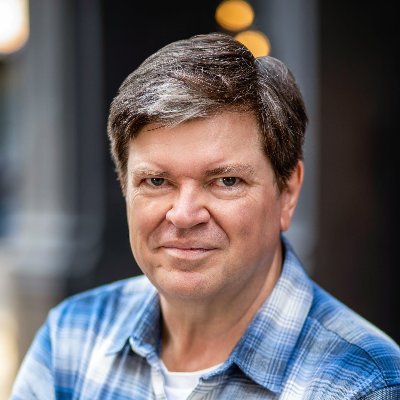
SueYeon Chung @s_y_chung from the NYU Center for Neural Science, the Centers for Data Science, and the Flatiron Institute, talking about neural manifolds at the CIFAR-ELLIS workshop "world models: causality, neuroscience, and AI safety," hosted by the Max Planck Institute in Tübingen.
显示更多


As neuroscience informs better #FutureWork# office design, @ryanjmullenix says employers should create spaces with varying noise, energy and interaction levels at #WSJFutureFest#
