与「OPTION」相关的搜索结果
OPTION 贴吧
一个关键词就是一个贴吧,路径全站唯一。
用户
未找到
包含 OPTION 的内容

Salesforce acquires Listen Labs for ~$2b. But who gets the 💰? My usual breakdown below 👇
The company was founded in Sep-23 and had raised less than $100m. Investors will share ~$850m of profits on $96m invested, a ~10x blended.
From a huge pivot to a unicorn valuation term sheet they refused, this is truly a wild story ✍️. In the end an incredible outcome for all involved.
So let's dive in!
1) The boldest move: walking away from $1.5b 🎲
Listen Labs had a signed $125m Series C term sheet from Menlo at a $1.5b valuation... and walked away from it to sell to Salesforce at ~$2b.
This takes a huge amount of courage: few founders turn down a signed unicorn-plus round. @itsalfredw and @florian_jue did it 2.5 years after founding.
Huge congratulations are in order for the discipline and execution of the founders here.
2) Founders and team: a life-changing outcome in under 3 years 🥳
By my best estimates, founders and team still own over half the company.
At $2b, that's ~$1.1b for them to share. Specifically, assuming a 15% option pool, that is ~$300m for the team and ~$750m for the two co-founders.
And, as was the case with Hugging Face, this is all from a pivot. They originally built an AI customer-interview tool to understand why their viral app BeFake was growing, then realised the tool was the business!
3) Sequoia's Bryan Schreier did it again 👑
What few people know is that Bryan was an early backer of Qualtrics... the category Listen Labs is disrupting.
Now he led both the seed and the Series A here. By my estimates, those two rounds will return ~$670m combined, or ~25x on ~$27m invested, in under three years.
Pattern recognition and industry knowledge have their perks, it would seem!
4) Ribbit: 4x in 8 months ⚡
Ribbit led the $69m Series B in Jan-26 at ~$500m. At $2b, that's ~4x in 8 months. Unbelievable IRR and a great return on a meaningful cheque.
5) Neo does it again, congrats @apartovi 🎯
Listen Labs went through the Neo accelerator early on, which came with a $600k SAFE. On my estimates, that cheque is worth ~$25m+ today.
This comes just three months after Cursor's acquisition (a cool >1,000x for Neo). What a hit rate!
This one is very straightforward: it is a massive win for everyone. And so congratulations to all involved: Sequoia, Ribbit, Conviction, Pear, Neo and the team!
显示更多


Kling 4.0 is coming this October. Kling 4.0 Flash is live now for Ultra Yearly subscribers.
Kling 4.0 brings video creation to a new level of visual realism, creative control, and narrative completeness.
🎞️ Upgraded Audio & Visuals: Stable dynamic motion, high-quality stereo audio, more accurate lip sync, up to 4K resolution, and 10-bit HDR output.
🔮 Omni Reference: Richer reference options with up to 15 multi-modal references, more consistent results, and enhanced video editing.
🎥 Seamless Storytelling: Multi-keyframe control supporting up to 10 keyframes, native 30-second generation.
🌍 Diverse Possibilities: Video extension, support for multiple languages, accents, and dialects.
The stage is set. You call the shots!
显示更多

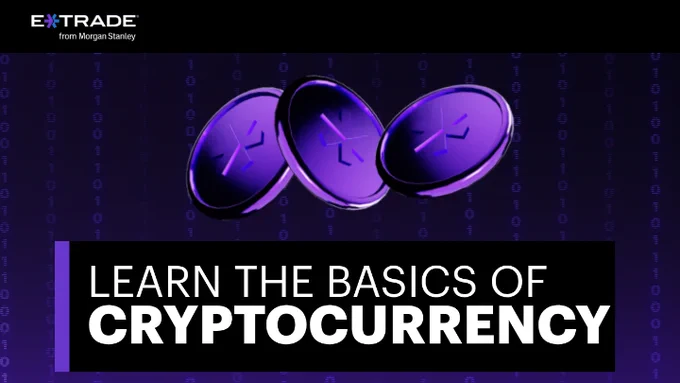
Learn the basics of cryptocurrency — from what makes it work and how ownership is tracked, to options for adding it to your portfolio and the risks associated with volatility. More episodes on our YouTube channel coming soon:
显示更多

Don’t sell. Collateralize. 🔒
BStocks Margin Collateral is now available to all Margin accounts.
Use your BStocks as collateral to unlock liquidity without giving up your position.
Stocks, perps, options, and more. All Finance on Binance.
Explore now 👉
显示更多


阿里把团队内部用了两年的官方 AI Code Review Skills 开源了,采用 “确定性工程 pipeline + AI Agent” 的混合架构,专门解决通用 Agent 做代码审查时 “漏审、定位漂移、质量不稳” 的老问题。
40.5K ✨ 开源项目 OpenCodeReview:
# 核心设计:确定性工程 pipeline × Agent 各司其职
确定性工程负责硬约束:
· 精确文件选择:用代码决定哪些文件必须审、哪些要过滤,不依赖模型自觉;
· 智能文件捆绑:把相关文件合成一个审查单元(例如 message_en.properties 和 message_zh.properties 捆绑),每个单元以上下文隔离的 sub-agent 运行,分治策略让超大变更集也稳,且天然支持并发(默认 8 个文件 worker);
· 细粒度规则匹配:内置约 54 个按语言/文件类型的规则文档(Java、Go、TS/JS、Python、Rust、SQL/XML mapper、properties 等),用模板引擎而非自然语言把规则匹配到文件特征上,从源头消除信息噪声;
· 外部定位与反思模块:评论的“落点”和“内容”分别由独立的 re-location 和 reflection 模块系统性校正,这正对“位置漂移”痛点。
Agent 负责动态决策:
· 深度优化的场景 prompt(内部分为 plan → grouping → main → memory_compression → re_location → review_filter 多个任务模板,可在 internal/config/template/prompts/ 看到);
· 从海量生产环境的 tool-call 轨迹(调用频率分布、单工具重复率、新工具对调用链的影响)反向蒸馏出的专用工具集,包括全文件读取、代码搜索、其他变更文件查阅等,比通用 agent 工具箱更小更稳。
# 能力面与生态集成
功能上覆盖:workspace/分支区间/单 commit 审查、断点恢复(ocr session)、全文件 scan(无 git 历史也能审计陌生代码库)、本地 Session Viewer 网页查看与回放、SARIF/JSON 输出、OpenTelemetry 可观测性、MCP Server 扩展。
作为 “Skills 生态” 级项目,它的形态相当完整:既提供 npm 全局 CLI,也提供可移植的 Agent Skill(skills/open-code-review/SKILL.md,带标准 frontmatter,可直接被兼容 skill 的 agent 加载),还有面向 Claude Code、Codex、Cursor、Kimi Code、OpenCode 等平台的插件,每种都封装成斜杠命令或可调用 skill。LLM 侧兼容 OpenAI、Anthropic、AWS Bedrock 三类协议,并可直接复用 Claude Code 的 ANTHROPIC_* 环境变量。
其中一个设计很巧妙:Delegation 模式(ocr delegate preview/rule)。此时 OCR 只做自己擅长的确定性部分(文件选择和规则解析)审查本身交给宿主 coding agent 的 LLM 执行,用户无需给 OCR 配任何 API key。这实际上是把“harness 能力”与“模型能力”彻底解耦。
# 工程质量:超出平均水准的部分
· 安全有正式的 Assurance Case(ASSURANCE_CASE.md):完整的威胁模型、四条信任边界、T1–T7 威胁逐条给出缓解措施,并按 Saltzer & Schroeder 设计原则和 OWASP Top 10 做了映射。细节经得起推敲:所有外部进程调用只限 git 且子命令硬编码、--end-of-options 防 flag 注入;Agent 读文件路径经 pathutil.WithinBase() 在符号链接解析前后双重校验;本地 Viewer 有 Host 白名单防 DNS rebinding + 严格 CSP。这类文档在一般开源项目里非常罕见。
· 贡献规范近乎严苛(AGENTS.md):使用 AI 必须在 issue/PR 中披露工具与模型、必须逐行理解 AI 生成的代码、禁止“AI 生成→反复修复→再修复”的循环、禁止把 commit 署名给 AI。源码强制英文(CI 有 english-check,连全角标点都查)、90% 测试覆盖率门槛、-race 与 govulncheck 每次 push 都跑、SPDX 头与 LF 行尾强制。
# Benchmark:数据情况
官方基准 AACR-Bench(已在 Hugging Face 开放)规模不小:50 个流行开源仓库、200 个真实 PR、10 种语言、80+ 资深工程师交叉验证出 1505 条标注问题。结论是同模型对比 Claude Code:Precision 和 F1 显著更高、token 消耗约为 1/9、速度更快。
需要指出两点:其一,Recall 低于通用 agent,README 自己承认这是“以精度换噪声”的刻意权衡,如果你最怕漏问题而非误报,可能不适合;其二,该基准由阿里自建,虽开放了数据集供社区复核,但独立第三方的复现结论目前还少,可以把它当作“有披露的、方向可信的参考”。
显示更多


X Numbers are here.
Share yours with anyone you want to contact you, even if you don't follow them. It's an optional way for people to message or call you, without you needing to accept requests or follow them back.
显示更多


The @GeniusFDN has accumulated $125,000 of $BNB, given that it can't be unwrapped, the foundation would like to propose 3 options: Buy, Split ($GENIUS & #1# Meme), or Hold.
We will use the full $BNB balance at the end of the poll.
What does the community want?
显示更多
Stock options are now just a few taps away on Binance. 👀
Choose a supported U.S.-listed stock or ETF, select Call or Put, review your order, and confirm.
All Finance on Binance.
👉
显示更多


Grok Bot Summary of SpaceX CFO Bret Johnsen at Goldman Sachs Communacopia today.
Vertical integration
Vertical integration is the company’s core operating model, not a side strategy.
- Rockets: own metal → engines → avionics → software
- Starlink: own launch, satellites, and the end customer
- AI: build facilities and power themselves, run their own models, sell to consumer and enterprise, and soon orbital compute
Starship and launch
Starship is the foundation for every other business.
- Flight 13: big learning flight. Delivered demo V3 payloads, relit a Raptor, and got a soft, precise second-stage splashdown. Recovery team towed the stage back so engineers could study the heat shield.
- Those learnings feed straight into Flight 14 and beyond.
- Flight 14 (later this month): first revenue-generating Starship flight, flying production V3 Starlink satellites.
- Later this year: aim to recover both first and second stages.
Orbital compute
Most of the AI industry agrees orbital compute is the future. Almost everyone else thinks it’s many years away. SpaceX disagrees because they control the stack.
- Target: first orbital compute satellites next year
- Scale: big compute in space into 2028
- Hardware approach: same V3 bus as Starlink, swap the payload, add larger solar arrays
Why orbital can beat terrestrial on cost
The crossover is about Starship reusability.
- Falcon 9: first-stage reuse since Dec 2015; 500+ booster reflights
- Starship: first stage already recovered/reflown; second-stage recovery progressing
- Goal: reflight of both stages as soon as next year, which drops deployment cost sharply
Terrestrial compute is getting more expensive (power, cooling, buildings, real estate). Orbital rides the opposite curve: cheaper rockets + better/cheaper satellites + scale. Johnsen said cost parity could come as soon as next year.
Terrestrial compute and the $100B ARR goal
- End of this year: on track for ~$100B ARR (annualizing the December number)
- New update: another hosting deal closed earlier this month → about $1.1B/month starting Dec 1 → roughly +$13B ARR
- Capacity: end this year well over 2 GW; next year 5–10 GW deployed
- Confidence comes from line of sight to power, facilities, and permitting, plus being NVIDIA-exclusive for allocation
- They stand compute up fast for themselves and for industry partners, which strengthens the NVIDIA relationship
How they monetize compute
Most hosting deals are short: ~90 days with a 90-day out (~6-month commits), including the newest deal.
Why keep them short?
- High conviction in their own products (Grok, Grok Bot, Cursor team after closing that deal)
- Don’t want to lock forever capacity they may need internally
- Internal bar: don’t let internal monetization fall below external hosting
Earnings framing for next year: roughly $30–$50 per watt monetization range; they said they’re at the high end. Hosting customers appear to monetize even higher, which is why demand stays strong.
Payback is under one year on new compute capex, so residual GPU value and financing options look attractive. “Not all CapEx is the same” — GPUs with <1-year payback are different from a launch tower built for decades.
AI products and M&A
Historically SpaceX was almost all organic growth. This year they did M&A because the AI product cycle rewards speed to frontier.
- Closed Cursor deal weeks ago; product cycles already accelerating (called out Grok Bot)
- Grok 4.6 improved on 4.5; 4.7 coming soon
- Pitch: best infrastructure + competitive model + lower token cost = best position for customers
- Market mood shift: months ago people bought the infra story but doubted the products; ~90 days later that skepticism is fading
Starlink broadband
Started as “better than nothing” (~2020–21). Now enterprise-grade with strong uptime/SLAs.
- Resiliency pitch: boards will ask why Starlink wasn’t in the network if you go down
- Mobility: aircraft backlog is large and production is ramping; cruise ships, yachts, trains too
- Awareness, especially outside the US, is still a growth unlock
- Longer-term: physical AI (robots, cars, aircraft) will need always-on connectivity terrestrial networks can’t fully cover
Mobile / direct-to-cell
Not a distraction. Same V3 bus, different payload.
- Fly direct-to-device satellites through next year
- Target service turn-on: first half of 2028
- V1 today (e.g. T-Mobile / T-SAT): text / light voice, great for emergencies and dead zones
- Next gen: full 5G-quality from space
- US: mid-band spectrum from EchoStar, FCC path for space + terrestrial
- Go-to-market: flexible — own terrestrial build, or partner with carriers
- International: same regulator-by-regulator playbook as broadband (Starlink now in 170+ countries)
Near-term priorities:
1. Starship (enables everything else)
2. Terrestrial compute (funds growth and teaches them how to do orbital)
Bottom line in one line
Own the full stack, make Starship reusable at scale, use terrestrial AI compute as a cash engine now, and use the same satellite bus + Starship cadence to win broadband, mobile, and orbital AI.
显示更多


Today, we’re making transferring your password and passkeys between password managers easier and safer on Android — no file downloads required.
Here’s how you can make the switch on compatible managers:
1️⃣ Start the move
Open your new password manager app and choose the option to import or copy your passwords and passkeys from another provider. The password manager will then hand the task over to @Android.
2️⃣ Let Android securely coordinate the data transfer
@Android will automatically detect existing password managers on your device and show you which you can import from.
3️⃣ Review and authorize
Once you tap “Continue,” @Android will bring you to your existing password manager to select, review, and authorize the transfer. Your data will then be quickly and securely transferred between the apps.
显示更多
