与「ByteDance」相关的搜索结果
ByteDance 贴吧
一个关键词就是一个贴吧,路径全站唯一。
用户
未找到
包含 ByteDance 的内容

overheard from friends talking about AI in China, and it’s very alarming
- AI short films went massive in China market because of how good the video models are now
- the first wave of people who mastered using AI to generate short films and comics made quite some money because they could produce a lot more content than traditional workflows
- but within just a few months, everybody and their mom could make equally good short films because all the expertise could be written in a markdown file
- when everyone’s more productive, no one actually has an advantage and it’s a race to the bottom. very quickly it became impossible to make money, and everyone’s busier than they were without AI
- the only one making money now is companies like bytedance who owns user demand and distribution. they sell ads to creators who pay to get traffic, and eventually ad spend became 80% of those creators’ operating expense, while AI tokens is less than 5%
so what are the problems here?
1. there’s no moat if you are creating anything with AI
if a human is really good at something, and it’s hard to find more humans who can do the same, they can leverage the scarcity of their skill to get paid very well
but if AI is good at something, it will be infinitely replicated, so there’s no scarcity hence you can’t really expect a sustainable business by creating anything with AI
2. more creators created more content people actually liked. that’s a good thing
but the economical benefit of that all got absorbed by the distribution platforms
there’s a famous chinese poem 遍身罗绮者,不是养蚕人 - it basically says people who dress well aren’t the people making dresses. that’s exactly what’s happening here
if our society doesn’t figure out a better way to distribute wealth, AI will help billionaires become trillionaires while average people become more exhausted than ever
显示更多

This is the biggest irony of the whole Alice Huang / Nvidia saga: the Chinese government actually doesn't want Nvidia chips and is actively keeping them out of the country.
Last year it even ordered Alibaba and ByteDance to cancel their Nvidia orders ( and sent customs teams to the ports to check every advanced chip coming in (
And right now 600,000 Nvidia H200s are stuck in Hong Kong because Beijing won’t let them into the country (
Nvidia also explicitly frames this as a threat to its business in its latest annual report to the SEC: "The Chinese government has encouraged customers to purchase from our China-based competitors and discouraged customers from purchasing, importing, or using our data center products" (
Why does China do that? Because every Nvidia chip a Chinese company buys is one that Huawei or Cambricon doesn’t sell, and domestic chips can only catch up if people actually buy them (which means money for R&D, etc.).
Which means that the notion that Chinese intelligence was running honeytraps to get more Nvidia chips into China gets the whole thing exactly backwards.
In fact, it looks like Megaspeed - Alice Huang's company - was a counter-reaction to official Chinese policy: a private sector workaround to these efforts by the Chinese government to curtail Nvidia.
As was widely reported - including by Western media - Megaspeed built data centers in Southeast Asia and rented their computing power to Alibaba, which the New York Times called "a backdoor way of getting access" to Nvidia chips (
That is a backdoor not only - allegedly - around Washington’s export controls, but also around China's own efforts to wean its companies off Nvidia.
I can’t believe the Chinese government was too thrilled about it: it'd make just about zero sense for it to run countless domestic measures to prevent Alibaba from using Nvidia chips, yet at the same time have its top spy agency help the same Alibaba get Nvidia chips through the back door in Southeast Asia 🤷
At the end of the day, as with all such stories, you always need to look at "cui bono?": who benefits? Who benefitted is pretty clear:
- Nvidia itself: it's in the business of selling chips so a customer willing to spend billions of dollars on chips in Southeast Asia is a godsend. Again, as they themselves state in their SEC filings, not being able to tap into Chinese demand would have "a material and adverse impact on our business" (
- Chinese companies like Alibaba: facts are, 1) Chinese chips haven't yet caught up, 2) Chinese chip companies' production capabilities are still limited and 3) Chinese tech firms' historical tech stack runs on Nvidia’s CUDA ecosystem, and rewriting years of code for Huawei chips is painful. Renting Nvidia chips in Southeast Asia is the easy way to stay competitive and serve customer demand in the meantime.
- The US, according to core members of the Trump administration: back in July last year, US Commerce Secretary Howard Lutnick explained that the point of letting Nvidia sell more chips to China was to get Chinese developers "addicted to the American technology stack" (
Who does NOT benefit, according to official Chinese policy, is the Chinese state, which has made tech self-reliance one of its foremost priorities.
Which means that, to believe the spy story, you have to believe that a person - Alice Huang - was effectively a spy paid by her own government while simultaneously sabotaging its tech self-reliance drive, which it has spent years and trillions of dollars on - pretty senseless.
Stranger things have happened, I guess, but it doesn't pass the smell test.
And there is another absolutely major contradiction in the media story. According to a Financial Times article published yesterday ( "a person who knows [Alice Huang] said they had been asked by MSS for information about her earlier this year after news emerged that Singapore was investigating the company in relation to chip-smuggling allegations. The agency wanted to find out more information about Huang, including the nature of her business and connections, the person said."
Which raises a damn obvious question: if she were indeed an MSS asset, why on earth would the MSS need to ask the people around her who she was and the nature of her business?
It's a complete contradiction with the spy story - but very much not a contradiction with what I described above: a private businesswoman running a workaround to Beijing’s own policy, which the Chinese security apparatus would naturally want to look into.
Especially since, around about the same time, Shanghai police detained her business partner, reportedly her husband, in a stock manipulation case ( also coherent with Chinese authorities looking into her network, and much harder to square with her being a prized MSS asset.
And, to top it all, there is - to this day - not a shred of evidence that's been published that she is, in fact, a Chinese spy: just anonymous intelligence officials, repeated by journalists who never verified it, as I detailed here ( and here ( with one of the key FT journalists on this story actually admitting that he has no idea what evidence US intelligence actually has.
So the claim went to print without anyone seeing the evidence, without anyone being able to check it, and without anyone knowing whether it even exists.
And given everything above, from Beijing blocking the very chips she was supposedly recruited to help get into China, to the MSS asking around about her, to her partner being detained in Shanghai, my bet is that the evidence doesn’t exist at all. If anything, everything we can check points the other way.
显示更多


美国为了锁死竞争对手在关键尖端领域的核心能力,通过长臂管辖和出口管制,对战略资产进行出口管制,都受到美国商务部工业与安全局BIS的出口管制条例约束,像燃气轮机和GPU这种,理论上都会严格审查到最终目的地或者最终用户。
但是出于强烈的利益驱动,中间层“白手套”公司通常都会有办法腾挪,最著名的是2017年西门子克里米亚燃机事件,四台原本是安装在俄罗斯Taman电厂的四台重型燃机,通过隐瞒和第三方转手的方式,被安装到了克里米亚半岛上,这是最近重型工业设备走私的经典案例。
迄今为止,美国司法部仍然在高压打击重型燃机的核心零部件的非法销售,俄罗斯圣彼得堡能源公司的高管通过虚假合同,从美国非法采购和转运燃机维修部件到俄罗斯和伊朗等国。
N卡也是同理,GPU掌管数字和AI时代的算力命脉,迭代速度快,政策漏洞更多(云服务,算力租赁等等),这就是为啥最近马来西亚特别是柔佛州,快速崛起成为全球与亚太地区最重要的AI算力中心与数据中心聚集地之一,在短短时间内突破数吉瓦(GW),吸引了包括微软(Microsoft)、谷歌(Google)、甲骨文(Oracle)、字节跳动(ByteDance)、阿里云以及杨忠礼集团(YTL)携手英伟达(NVIDIA)等全球巨头的大规模布局。
这其实是极其复杂的灰色地带,如果通过东南亚(如柔佛)的数据中心把算力“穿透”并提供给禁令国家和地区的用户,实质上也就突破了物理芯片的出口禁令,这种模式早期一度被认为是合法的“技术套利”。美国政府显然也已经意识到了这一点,美国国会众议院以压倒性优势通过《远程访问安全法案》(简称 RASA)来封堵这个漏洞。
这其实就不难理解,为什么Alice会被放在高倍放大镜下:中国籍,45亿美金GPU订单,新加坡,东南亚算力中心。老黄其实很明白,想要保持住技术竞争优势,就得效仿当年Windows的免费战略,但现在已经是2026年了,夹在中间供腾挪的空间也不大了。
显示更多


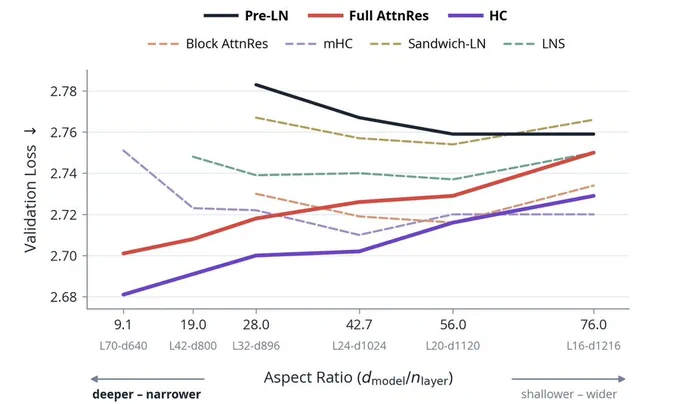
1/ 大模型越深,不一定越强。
Kimi K3 用 AttnRes,DeepSeek V4 用 mHC,ByteDance 提出 HC,目标都是破解“深度诅咒”。
但这些方法的训练预算、模型设计和代码库不同,无法直接比较。
哪种方法真正有效?DepthBench 开始寻找答案👇
显示更多

ByteDance dropped a banger paper on self-evolving agent harnesses!
HarnessDev evaluates whether AI agents can build a runnable harness from scratch and iteratively improve it using execution feedback.
Most agent benchmarks keep the harness fixed and only evaluate the model inside it. HarnessDev changes the target of evaluation itself.
The agent starts from a minimal seed, builds the harness around the task, runs it, observes what worked or failed, and then modifies that harness across multiple iterations.
That means the agent is not only solving the task. It is also changing the planning, memory, tool use, state management, and execution logic around itself.
The paper evaluates this in two stages:
• Creation: can the model build a complete runnable harness from a minimal starting point?
• Evolution: can it improve that harness using feedback from previous runs?
The interesting part is that runnable does not automatically mean better.
Some generated memory and state mechanisms existed in the code but were barely used during execution, and improvements on visible feedback did not always transfer to held-out tasks.
Only 34 of 64 harness changes moved in the same direction on both visible feedback and held-out evaluation, and only 2 of 9 final harness versions were actually the best-performing version on the held-out set.
So the paper is really exposing a new challenge:
Agents can already start modifying the infrastructure they run on.
The harder part is making sure those changes actually generalize.
I've shared the paper in the comments!
显示更多


AiHUBの生成AIツール「CW Canvas」ByteDance「Seedance 2.5」に対応。
IP権利証明でフィルター解除できる「日本初」ツールのクローズドβ版ウェイトリストを公開しました🔥
↓
显示更多


The "Web app" standard for the Agentic Web/OS has arrived.
It is essentially the open standardization of the third-party app/plugin ecosystem found in ChatGPT. It consists of Skills and MCP, with MCP covering standards such as MCP Apps and MCP-UI, which allow third-party apps to embed GenUI-based interactive interfaces directly into the main Agentic Web/OS interface.
WebMCP is about "embedding Tools within UI," while Agent Plugins / MCP Apps are about "optionally embedding UI within Tools." The core of this kind of "app" ecosystem are Tools, rather than any specific UI representation, such as cards, icon + Activity, or windows.
AppFunctions / AppIntents / AppActions on Android, iOS, and Windows, like WebMCP, also belong to the "embedding Tools within UI" model.
The current CLI ecosystems around Coding Agents such as Codex and Claude Code are effectively local "native app" ecosystems: apps have to be pre-packaged, downloaded, and installed, and users cannot realistically install too many of them.
By contrast, Agent Plugins / MCP Apps can be regarded as a kind of "Web app" ecosystem, because their core functionality is retrieved from the Web on demand. Skills, like manifest-style files such as mcp.json, are lightweight distributions of code with declared metadata, somewhat like HTML: they can be discovered, loaded, activated, and used on demand, in a process analogous to HTML rendering but much more intelligent.
This creates an opportunity to extend existing Web standards, which are centered around the distribution of UI resources. Instead of RESTful HTTP exposing only a limited set of actions over resources, the Web could expose a vast long tail of Tools that AI can discover and understand, and that can optionally embed UI.
A general-purpose Agent capable of discovering, loading, and running Agent Plugins / MCP Apps on demand would be equivalent to "the browser + Google" of the desktop Internet era.
If such an Agent becomes a super app, it could easily abstract away the operating system and become the single dominant super app for most user scenarios, much like the desktop Internet era, rather than the mobile Internet era with many parallel super apps. So such an Agent will naturally tend to integrate into the entire OS and even the hardware itself, much like IE vs. Netscape. That is also why Google, OpenAI, and even ByteDance are determined to build consumer electronics hardware products.
显示更多


Google's Gemini Omni Flash debuts at #1# on the Artificial Analysis Text to Video and Image to Video Leaderboards, edging out ByteDance's Seedance 2.0 on both
Gemini Omni Flash is the first model in Google's Gemini Omni family, unveiled at Google I/O in May and opened to developers in public preview on June 30. Google positions Omni as a natively multimodal model that can "create anything from any input", starting with video: it accepts text, images, and video as input, generates clips with native audio, and supports conversational editing, where prompts change a video while preserving the rest of the scene. Gemini Omni Flash generates 3 to 10 second clips at 720p and 24 FPS, in 16:9 or 9:16, with longer durations coming soon.
In the Artificial Analysis Video Arena, Gemini Omni Flash debuts at #1# on both the Text to Video and Image to Video Leaderboards, narrowly ahead of ByteDance's Seedance 2.0 on each.
Gemini Omni Flash is priced at $0.10 per second of generated video ($6.00 per minute), matching Veo 3.1 Fast. The rate is the same for Text to Video and Image to Video.
It is available now in the Gemini API, Google AI Studio, and the Gemini Enterprise Agent Platform, in the Gemini app and Google Flow for consumers, and at no cost in YouTube Shorts and the YouTube Create app.
Congratulations to @GoogleDeepMind on the release!
See below for comparisons between Gemini Omni Flash and other leading models in the Artificial Analysis Video Arena 🧵
显示更多


Introducing GAIB Select, a new product from GAIB that opens access to some of the most sought-after pre-IPO equity in the world, onchain.
First offering: ByteDance, the company behind TikTok.
Now available at
显示更多


Today’s been an absolutely stacked day for AI news. In case you missed it:
1. GPT 5.6 Sol and Sol Ultra dropping tomorrow. Early reviews say it’s not as smart as Fable but very positive.
2. Grok 4.5 launches from Cursor / SpaceX that claims Opus 4.7 quality at 80tps and $2/M in $6/M out price.
3. Bytedance Seedream 5 Pro launches as an image ~#2# and nearly as good as GPT Image 2 at 4x cheaper cost: $0.045-$0.09/image, specializing in edits and infographics. Easily beats Meta’s Muse Image.
4. GPT-Live launches a full duplex non-turn based voice model which allows interactions while you’re talking seamlessly, a huge upgrade in audio AI for consumer
Coming soon:
1. Seedance 2.5 Pro expected to launch soon (early July) to further extend Bytedance’s lead in SOTA video gen models. Will use Seedream 5 Pro as the frame generator.
2. Gemini 3.5 Pro launching soon (July 17). Google seems to have fallen quite behind frontier and people eagerly await to see what Google can put out here amidst a string of high profile departures.
3. GPT-6 rumored to launch soon (Polymarket spikes at August 14) with a new larger retrain, taking aim at Fable.
显示更多