与「Enterprise」相关的搜索结果
Enterprise 贴吧
一个关键词就是一个贴吧,路径全站唯一。
用户
未找到
包含 Enterprise 的内容

Grok 4.7 xHigh ranks #1# in Artificial Analysis Cyber Index
It's a powerful frontier model performing at the highest level in enterprise cyber defense
Outperforming Fable 5.1 Max, Opus 5.5, Astra 6, GPT-6 and other leading AI systems
显示更多


Meta 宣布推出名为“Meta Enterprise Platform”的企业服务平台,正式把服务企业客户作为公司未来的核心业务支柱之一。
Meta 打算把自家的底层技术开放给各类公司和开发者使用。初期开放的技术包括智能助手 Muse、商业助手 Meta Business Agent、编程工具 Muse Code 以及相关的软件开发接口,方便企业把 Meta 的 AI 能力直接接入到自己的业务流程中。
为了负责这项新业务,Meta 挖来了企业软件领域的资深管理者 CJ Desai 出任首席企业平台官,直接向扎克伯格汇报。CJ Desai 之前担任过 MongoDB 的首席执行官,也在 Cloudflare 和 ServiceNow 担任过核心高管。
Meta 表示,后续会把保护数据隐私和系统安全放在首位,帮助不同规模的公司借助 Meta 的 AI 工具提高运转效率、拓展客户群。
官方公告:
显示更多

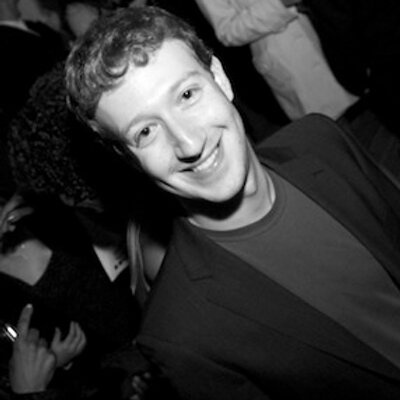
We believe superintelligence will create significant new opportunities for all people and businesses. Meta already serves billions of people at scale and helps hundreds of millions of businesses reach customers. Today we are starting the next major pillar of our business, Meta Enterprise Platform, to help businesses use AI to grow and transform in new ways as well.
显示更多

Today, 18 months after launch, our annualized revenue crossed $1 billion.
The platform now powers organizations across the Fortune 500. Enterprise adoption has grown 10x since June.
More than 30 million people worldwide now use Higgsfield.
Thank you to the creators and teams building with us.
显示更多


introducing Gemini 3.8 Flash TTS and Gemini 3.8 Flash-Lite TTS, our most expressive audio generation models yet
these models enable creators, developers, and enterprises to create richer, more expressive audio experiences
try them via the Gemini API and in AI Studio:
显示更多


patterns in the ai startups that blow up
if you advise enough companies, take enough founder calls, watch enough launches, you start to see repeating structures
here’s the blueprint all of them share:
1. a relentless launch cadence
they never shut up
one of my clients launched every wednesday
higgsfield launches 2-3x/wk
always manufacturing something to talk about
2. one channel = unfair advantage
they’re active everywhere
but one channel carries them
3. a founder who’s the face
the founder is the loudest account in the company
weekly podcasts. vlogs. clip & ugc farms
people know the product bc they know the founder
4. volume over perfection
they never post and chill out
they tell the same story 100 times
for every post that does 10k views, another does 10m
5. no fear of price
the loudest ai companies don’t negotiate
they spray
higgsfield is a perfect example of crazy budgets
6. a second motion once plg breaks
elevenlabs is around $500m arr i believe
the first $300m came from plg
the rest came from enterprise, now 50/50 ish
7. omnipresence over roi
on most channels they stop asking about direct roi
they ask how the whole entire planet hears abt them
scroll anywhere & they’re there
they think blended CAC
growth at the highest level isn’t random
it’s a pattern repeated by everyone with skin in the game
once you see it. you can’t unsee it.
显示更多

Gavin Baker: "The Magnificent 7 will go from $10-12 trillion to $50-100 trillion. But one or two of them will go extinct."
His foundation-model survival list is short:
- Google — search-plus-Gemini flywheel
- Meta — Llama + ad-revenue self-funding
- xAI — X + Tesla data footprint
Anthropic, OpenAI, everyone else — Baker treats them as commoditized.
His FOMO warning: "Application SaaS is done. If you went all-in on crypto and SaaS in 2021, don't repeat the trade."
On AGI: "Elon says 3 years. I say 5 is safer."
On regulation: "The leading labs weaponized fear of China. There's going to be no regulation."
The math he keeps quoting: $12T → $100T is 8x. But 1-2 die means winners take 30-40% of the total, not 14%.
Baker's frame: no regulation + AGI in 5 years + Mag 7 8x = biggest enterprise-value transfer in market history is happening right now.
显示更多


🌟AI Token Smart Router is officially live.
Our enterprise model-access layer. One gateway now serves our proprietary models and 38 third-party models; when a decision is required, the call runs through Judgment. Multi-model traffic stays on a single integration, instead of being wired up model by model. Enterprises get one place to select a model, meter usage, and receive a judgment that can be traced back.
During the pilot, we onboarded dozens of B2B clients, including ポケモン公認カードショップ「ヘイデン」. Cumulative external calls: ~49 million. Those calls sit outside our own apps; they come from enterprise use.
That usage converts into protocol revenue. A portion is used to buy back $AIA and feeds the value flywheel. More calls mean more revenue, and more revenue means more buybacks.
See it now👉:
#AIA# #DeAgentAI# #AITokenSmartRouter#
显示更多


Yep. Except:
1. This was about important internal tools. The team was stuck in some architecture nightmare of their own doing (writing it in rails but headless, with graphql api, and a SPA react app, constantly needing frontend engineers for changes). I call this kind of thing 'cosplaying an enterprise production app'. All that complexity was in the way and using straight rails was perfect in that case.
2. I make calls like this all the time. Usually someone on the team asks me to. They see what needs to happen but don’t want to be the bad guy. I’m happy to just make the call if I agree with the premise. Saves enormous amounts of meetings and change management etc. Sometimes this is jokingly referred to as Founder-mode-as-a-service here.
3. For ten years I’ve also run an internal podcast called Context, where I revisit decisions like these and explain the reasoning so everyone can learn from them. This is helpful to give people all the variables that were considered and why this was the choice made given the information available at the time. I want to teach how to make such decisions effectively without needing me. Sunk cost fallacy is a problem.
4. Any notions that Shopify is succcessful despite of me doing this, instead of because of it, will have a hard time making their argument come together I think 😄
the part of 'two weeks later tobi learns about...' is nonsese and the pivot of that project up there happens one of the more successful examples of interventions. But getting the company to work effectively with great architecture and low technical debt baggage into the right direction is literally the job, so guilty as charged I suppose.
But there are always cope stories floating around like this because they are more fun, than saying 'somehow we needed tobi to stop doing silly architecture astronautics'. I can totally see that.
显示更多

Grok Bot Summary of SpaceX CFO Bret Johnsen at Goldman Sachs Communacopia today.
Vertical integration
Vertical integration is the company’s core operating model, not a side strategy.
- Rockets: own metal → engines → avionics → software
- Starlink: own launch, satellites, and the end customer
- AI: build facilities and power themselves, run their own models, sell to consumer and enterprise, and soon orbital compute
Starship and launch
Starship is the foundation for every other business.
- Flight 13: big learning flight. Delivered demo V3 payloads, relit a Raptor, and got a soft, precise second-stage splashdown. Recovery team towed the stage back so engineers could study the heat shield.
- Those learnings feed straight into Flight 14 and beyond.
- Flight 14 (later this month): first revenue-generating Starship flight, flying production V3 Starlink satellites.
- Later this year: aim to recover both first and second stages.
Orbital compute
Most of the AI industry agrees orbital compute is the future. Almost everyone else thinks it’s many years away. SpaceX disagrees because they control the stack.
- Target: first orbital compute satellites next year
- Scale: big compute in space into 2028
- Hardware approach: same V3 bus as Starlink, swap the payload, add larger solar arrays
Why orbital can beat terrestrial on cost
The crossover is about Starship reusability.
- Falcon 9: first-stage reuse since Dec 2015; 500+ booster reflights
- Starship: first stage already recovered/reflown; second-stage recovery progressing
- Goal: reflight of both stages as soon as next year, which drops deployment cost sharply
Terrestrial compute is getting more expensive (power, cooling, buildings, real estate). Orbital rides the opposite curve: cheaper rockets + better/cheaper satellites + scale. Johnsen said cost parity could come as soon as next year.
Terrestrial compute and the $100B ARR goal
- End of this year: on track for ~$100B ARR (annualizing the December number)
- New update: another hosting deal closed earlier this month → about $1.1B/month starting Dec 1 → roughly +$13B ARR
- Capacity: end this year well over 2 GW; next year 5–10 GW deployed
- Confidence comes from line of sight to power, facilities, and permitting, plus being NVIDIA-exclusive for allocation
- They stand compute up fast for themselves and for industry partners, which strengthens the NVIDIA relationship
How they monetize compute
Most hosting deals are short: ~90 days with a 90-day out (~6-month commits), including the newest deal.
Why keep them short?
- High conviction in their own products (Grok, Grok Bot, Cursor team after closing that deal)
- Don’t want to lock forever capacity they may need internally
- Internal bar: don’t let internal monetization fall below external hosting
Earnings framing for next year: roughly $30–$50 per watt monetization range; they said they’re at the high end. Hosting customers appear to monetize even higher, which is why demand stays strong.
Payback is under one year on new compute capex, so residual GPU value and financing options look attractive. “Not all CapEx is the same” — GPUs with <1-year payback are different from a launch tower built for decades.
AI products and M&A
Historically SpaceX was almost all organic growth. This year they did M&A because the AI product cycle rewards speed to frontier.
- Closed Cursor deal weeks ago; product cycles already accelerating (called out Grok Bot)
- Grok 4.6 improved on 4.5; 4.7 coming soon
- Pitch: best infrastructure + competitive model + lower token cost = best position for customers
- Market mood shift: months ago people bought the infra story but doubted the products; ~90 days later that skepticism is fading
Starlink broadband
Started as “better than nothing” (~2020–21). Now enterprise-grade with strong uptime/SLAs.
- Resiliency pitch: boards will ask why Starlink wasn’t in the network if you go down
- Mobility: aircraft backlog is large and production is ramping; cruise ships, yachts, trains too
- Awareness, especially outside the US, is still a growth unlock
- Longer-term: physical AI (robots, cars, aircraft) will need always-on connectivity terrestrial networks can’t fully cover
Mobile / direct-to-cell
Not a distraction. Same V3 bus, different payload.
- Fly direct-to-device satellites through next year
- Target service turn-on: first half of 2028
- V1 today (e.g. T-Mobile / T-SAT): text / light voice, great for emergencies and dead zones
- Next gen: full 5G-quality from space
- US: mid-band spectrum from EchoStar, FCC path for space + terrestrial
- Go-to-market: flexible — own terrestrial build, or partner with carriers
- International: same regulator-by-regulator playbook as broadband (Starlink now in 170+ countries)
Near-term priorities:
1. Starship (enables everything else)
2. Terrestrial compute (funds growth and teaches them how to do orbital)
Bottom line in one line
Own the full stack, make Starship reusable at scale, use terrestrial AI compute as a cash engine now, and use the same satellite bus + Starship cadence to win broadband, mobile, and orbital AI.
显示更多
