与「I_AM_ME 」相关的搜索结果
I_AM_ME 贴吧
一个关键词就是一个贴吧,路径全站唯一。
用户
未找到
包含 I_AM_ME 的内容


Just want to let everyone know I have been released and I am good,healthy and ready to go . I want to thank everyone in Abu Dhabi for your help in resolving this matter. I love visiting Abu Dhabi and am happy to be welcomed. I do hope that they release everyone - i would not press charges. I want peace and the best for all. Thanks everyone for your love and support🦾
显示更多
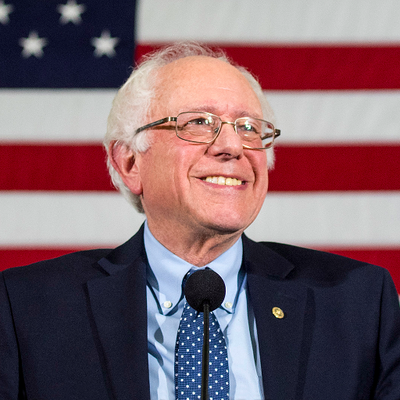
The American people voted for change. They want a Democratic Party that will stand up to powerful special interests, take on the billionaire class and fight for working families.
That is why I am supporting Senator Chris Van Hollen to lead Senate Democrats.
显示更多

I am actually disgusted by the timing of this drop. And this will get a bit more technical.
Let’s do a real technical teardown of this "1,385-sigma Blackwell weight fingerprint" report that OpenAI and Anthropic are breathlessly promoting today, because banking on nobody reading past the headline is how DC narratives get manufactured.
First, look at the actual CUDA maths: when PyTorch initialises model weights (torch.nn.init) with a fixed PRNG seed, curand/Philox parallelises random number generation across the GPU’s Streaming Multiprocessors (SMs).
Because Hopper has 132 SMs and Blackwell has 148 or 152 SMs, the exact same seed lays out initial weights in a different spatial pattern depending on the GPU’s SM count. In huge MoE models, certain low-gradient null-spaces or unrouted slices preserve faint directional traces of those step-0 weights even after training.
So yes, brute-forcing the seed and SM grid can show that a model’s step_0 weight initialisation script ran on a 148/152-SM Blackwell GPU. Now read what the summary explicitly admits in the fine print:
1. Initialisation is not full training: The report literally states that these signatures show how the weights were created, and "support (but do not prove) the inference that Blackwell also participated in model training". Initialising a model checkpoint takes seconds on a single rented dev node before loading the safetensors onto a standard Hopper cluster. The "2,000 to 3,000 Blackwell GPUs" and "$500 million" cluster numbers do not come from the weight fingerprint and Depue admits in his own thread that he simply "estimated" cluster sizes from release schedules and model details.
2. Zero geolocation and zero proof of smuggling: The final sentence of the executive summary explicitly admits that the findings "do not establish the physical location of the chips, how they were acquired, or whether export control regulations were violated". Depue himself rented a cloud GB200 instance just to run his verification test. Commercial labs that are not on the Entity List renting bare-metal Blackwell nodes in offshore clouds (Singapore, Japan, or the Middle East) is completely legal under BIS rules and leaves the exact same SM fingerprint.
Now ask yourself why a former OpenAI researcher dropped this on November 12, the exact day Jensen Huang was pushed out, with OpenAI and Anthropic immediately stepping in to "independently verify" it.
US closed-source labs are watching their paid API moats get eaten alive by free Chinese open-weights models.
Conflating a step-0 PRNG initialisation seed with a "$500M smuggled Blackwell cluster" hands DC hawks the exact pretext OpenAI and Anthropic want to regulate global cloud compute and kneecap open-source AI.
显示更多

the truth is... i am iron man
WASvsNYG – 8:15pm ET on Prime
Stream on @NFLPlus


I have a major result to share.
I’ve found conclusive forensic evidence that the top 4 Chinese AI labs—DeepSeek, Moonshot, MiniMax and Ant Group—have built their newest models on NVIDIA’s most advanced Blackwell chips, which are barred from export to China.
This sounds insane, but I discovered that almost every AI model carries a hidden signature of the GPU that trained it. When a model is first set up, the starting values of its weights are laid out in a pattern that depends on the exact GPU. Each combination of GPU and seed number produces a unique pattern—a sort of fingerprint of the hardware used to create the model. Traces of that pattern survive training into the published model.
Again, this evidence isn’t based on any insider information or leaking. It’s based on a forensic analysis of the model weights released by the companies themselves.
I searched more than six trillion combinations of chip layout and seed number and matched them to open-weights models. In doing so, I found conclusive evidence that six Chinese AI models—including DeepSeek-V4-Pro, Kimi K3, and MiniMax-M3—were initialized on NVIDIA Blackwell systems. Four of the models match Grace Blackwell, the GB200 and GB300 parts in NVIDIA’s flagship liquid-cooled rack-scale systems.
I then verified these results on real hardware. Running unmodified PyTorch with the seeds I’d recovered, a Blackwell B300 reproduced DeepSeek-V4-Flash’s untouched starting weights bit for bit, and a rented GB200 reproduced Kimi K3’s to a correlation of 0.999995. A Hopper H100 reproduced none of DeepSeek-V4-Flash’s, and changing the seed by one broke the match. (DeepSeek’s seed is 953049583 by the way.) The method also was verified to match 24 known open-weights models to the hardware that developers said they used.
It is exceedingly unlikely that these results are a coincidence. Across six trillion combinations, the best accidental match should reach only about 8 sigma (i.e., eight standard deviations above what random chance would produce). The real matches range from 49 to 1,385 sigma, and even the weakest single test hits 20.
These were data-center-scale training runs. With some analysis of release schedules and model details, I estimate that the largest, Kimi K3 and DeepSeek-V4-Pro, used 2,000 to 3,000 Blackwell GPUs each. Clusters of this size cost on the order of $150 to $200 million each to buy, and across these labs alone would add up to more than half a billion dollars of export-controlled GPUs, not counting experimental compute or otherwise. It’s quite likely that we see multi-billion dollar expenditure on export-controlled GPUs.
I am highly confident in this result, and it has been independently verified by senior researchers at OpenAI and Anthropic. You can read the full report at
There is much more I’ve identified about these models through other forms of checkpoint forensics like this, and will have more to share soon.
显示更多


Elon Musk, I decided to bring Jensen Huang onto the team because you simply do not pass up a once-in-a-generation opportunity to recruit the greatest compute architect on Earth. When it comes to building massive AI infrastructure, designing next-generation silicon, and scaling hardcore engineering at extreme velocity, nobody operates on Jensen’s level, and his vision for accelerated computing aligns 100% with what we are building across xAI, Tesla, and SpaceX. Bringing his unmatched expertise in-house to merge with our Dojo supercomputers, Grok clusters, and real-world robotics will compress years of innovation into months—and when legacy boards hesitate on true greatness, I am always going to bet big on the best talent in the world.
显示更多

As all NVIDIA employees I guess, I am deeply concerned by the campaign against Jensen Huang. Removing him would be a disaster.
Many have documented on X and elsewhere how this looks like a coordinated coup.
I'd add only one thing. Look at who would benefit from a dramatic weakening of NVIDIA.
It is not China. It is not about selling GPUs to China because that train has left. China authorities have pushed back on the H200 the Trump administration allowed NVIDIA to sell.
Look at what Jensen pushed back on:
- regulations that would make open source model training too expensive
- regulations that would make closed model providers immune to liabilities caused by their models. He said "if your product is not ready, then don't ship it"
- regulation against model distillation. He said "this is competition. People do it all the time with NVIDIA products, they try to reverse engineer them."
The other side will do everything they can to get him fired.
As a French, I can't care less about his private life. I get that the US is puritan and sees it otherwise. But frankly, isn't it something he and his family has to deal with? Why should all NVIDIA employees, partners, and investors be collateral damage?
Disclaimer. As my bio says, the above are my views only. I do not represent NVIDIA by any means. I only commented on publicly available information.
显示更多

I am a shareholder of Nvidia since 2015. It is the first stock I bought. I am also a gamer, a crypto investor, and a AI researcher. I own a 1080Ti, a 2080Ti, 3090, 4090, and multiple Pro 6000 GPUs. For me, Nvidia is not only the company giving me investment returns. It gave me so many joyful memories. And it is still making new memories for me every day.
As shareholders and customers, we want Jensen to stay as Nvidia's CEO. We can't let 3 or 5 deep state board members decide the fate of the world's greatest company. We must let shareholders vote.
LET SHAREHOLDERS VOTE!
If you support us, please repost.
显示更多


Her name is Kimberly Powell. She is 48 this year and joined Nvidia in 2008.
> November 8, 2026. Jensen Huang sends a letter to every Nvidia employee.
> “I was unfaithful to my wife. My actions hurt her and our children. There is no excuse for what I did. I am deeply sorry.”
> The affair was with Alice Huang, a Chinese businesswoman suspected by US intelligence of being a spy.
> The board opens an investigation.
> The FBI is involved.
> Nvidia’s stock falls.
> Then, three days later, the story gets worse.
> November 11, 2026. The New York Times publishes a second report.
> Jensen Huang had another affair.
> A second woman.
> A subordinate.
> Someone who reports directly to him.
> Her name is Kimberly Powell.
> Vice president of healthcare at Nvidia.
> Joined the company in 2008.
> Promoted to senior director in 2016.
> Vice president by the end of 2017.
> Eighteen years at Nvidia.
> One of Huang’s roughly sixty direct reports.
> She is 48. He is 63.
> Both are married.
> March 2026. Nvidia’s GTC conference in San Jose.
> Powell presents on AI and healthcare.
> Her slides use animated images of Huang.
> Then executives gather at a nearby hotel.
> Huang and Powell are seen together.
> Affectionate. Intimate.
> A witness records it on their phone.
> Huang’s security team spots the witness.
> Escorts them away.
> Asks them to sign a confidentiality agreement.
> The video still exists.
> Five former Nvidia employees confirm the relationship was discussed inside the company.
> Nvidia’s code of conduct has a rule.
> Personal relationships can create conflicts of interest.
> The company says it promptly investigates reports of misconduct.
> The CEO wrote the letter that begins the code.
> He is now the subject of the investigation.
> November 12, 2026. The board prepares to meet.
> The Wall Street Journal reports the board could determine his future as soon as that day.
> The board is preparing to oust the CEO who built the most valuable chip company on Earth.
> Nvidia’s stock sinks more than 7% after hours.
> Huang, Powell, and Nvidia have all declined to comment.
> None of the allegations have been confirmed by any of them.
> The first affair cost him his reputation.
> The second affair may cost him his company.
> He admitted one. He has said nothing about the other.
> The board is meeting.
> The investigation is expanding.
> The man who kept his promise to Lori Mills is running out of promises to keep.
He built the most powerful company in the history of computing.
He admitted to one affair.
Then a second woman’s name surfaced.
The board is deciding whether he still runs the company he founded.
His name is Jensen Huang.
He is 63 years old.
And for the first time in his life, the next move is not his to make.
显示更多

