与「Love_And_pain」相关的搜索结果
Love_And_pain 贴吧
一个关键词就是一个贴吧,路径全站唯一。
用户
未找到
包含 Love_And_pain 的内容

이수현 - Love And Pain (도시남녀의 사랑법 OST Part.3)
이수현의 OST 'Love And Pain' 음원이 공개되었습니다. 지금 들어보세요♬
#AKMU# #악뮤# #이수현# #수현# #도시남녀의사랑법# #도시남녀의사랑법OST# #Love_And_pain# #LoveAndPain#
显示更多
#HELLOAKMUFAN# 1월 16일(토) 오후 6시 <이수현 - Love And Pain ' 도시남녀의 사랑법 OST'> 발매! 😆
뮤직비디오 티저를 아래 링크에서 확인하세요!
🎥
#AKMU# #악뮤# #이수현# #수현# #도시남녀의사랑법# #도시남녀의사랑법OST# #Love_And_pain# #LoveAndPain#
显示更多

Everyone talks about AI enabling the "one-person Hollywood studio." I spent the last two months putting that to the test.
The result? A full, 2+ hour feature film.
Introducing "The Four Classics." Using @suno, @soraofficialapp , @grok Imagine 1.0, and Genie 3 by @GoogleLabs , I adapted China’s greatest literary epics into a sprawling, cyberpunk hip-hop opera.
Grab some popcorn. Welcome to the future of AI film production. 🍿🎥
Timestamps:
Water Margin
0:00:09 “The Tiger (十八婉)”- Wu Song rejects the law and engages in a drunken battle defeating the Tiger
0:03:20 “Forced to the Mountain (逼上梁山)”- Lin Chong seeks revenge on Gao Qiu for destroying his life and familial honor
0:09:24 “Black Whirlwind (黑俊峰)”- Introduction of the brute Li Kui and his love for violence
0:11:42 “The Gathering / 108 (大聚义)”- The Liangshan heroes formally assemble to announce their reign at the Hall of Loyalty and Righteousness
0:14:08 “The Amnesty (招安)”- Song Jiang, leader of the heroes, debates the pros of accepting an offer of Amnesty from the Emperor
0:18:05 “The Poison Wine (神聚蓼儿洼)”- Song Jiang encourages Li Kui to join him in drinking Poisoned Wine gifted by the Emperor
Romance of the Three Kingdoms
0:22:20 “The Oath (桃园)”- Liu Bei is a small time hustler with ambition to take over the nation. He makes a blood oath with Guan Yu and Zhang Fei to do so.
0:25:57 “The Mastermind (卧龙)”- Liu Bei recruits the strategist Zhuge Liang to join his cause and take over the kingdom
0:30:49 “The Burden (仁义)”- Caocao’s troops attack causing Liu Bei and Shu to flee south. Liu Bei burns the city of Xinye and uses common people as human shields to make his escape.
0:33:44 “The License (挟天子)”- Caocao plans his move to crush the growing nation of Shu from his penthouse
0:36:45 “No Regrets (宁负)”- Flashback to Caocao’s betrayal of his ally Old Lu. He chooses to massacre a banquet after hearing the sound of knives sharpening. An examination of ruthless ambition.
0:39:59 “The Flex (八十万)”- Caocao’s army of 800k soldiers races south to destroy Liu Bei’s Shu.
0:43:26 “The Estate (江东)”- Sun Quan, leader of Wu, forms an unlikely alliance with Liu Bei to quell the approach of Caocao’s army
0:47:27 “The Shift (东风)”- Zhuge Liang summons the East Wind to change the fate of Caocao’s army at the Red Cliffs
0:51:15 “The Chains (连环)”- Pang Tong of Shu deceives Caocao into chaining his fleet of ships together setting the perfect trap
0:54:37 “Symphony No.7 (第七交响曲)”- General Zhou Yu of Wu sparks the trap set by Shu strategists lighting Caocao’s entire fleet ablaze. The Epic Battle of the Red Cliffs concludes Caocao’s push south.
0:59:25 “The Split (三分)”- Opening Credits. Sima Yi reviews the status of the Three Kingdoms after The Red Cliffs result in an uneasy truce.
1:02:23 “Still G.U.A.N.”- Following the war, Guan Yu runs operations in Jingzhou. Sun Quan sends a formal message requesting Guan Yu’s daughter marry his son strengthening the alliance. Guan Yu promptly refuses insulting the leader of Wu.
1:05:58 “The Statue (刮骨)”- After an assassination attempt, Guan Yu is struck with poison that makes its way into his bone. He requires immediate, invasive surgery. He survives through his grit, maintaining his arrogance, but weakened from the procedure.
1:09:42 “The Funeral (白衣)”- Guan Yu is ambushed by Wu’s forces after retreating to the mountains of Maicheng. The Wu assassins approach as merchants, disguised in white clothing, catching Guan Yu by surprise.
1:13:19 “The Lie (桃园)”- Liu Bei receives news of Guan Yu’s death and sets out on a war path against Wu. He loses his composure leaning into pills to cope with the loss of his blood brothers.
1:17:08 “The O.D. (七百里)”- Liu Bei’s madness leads him to make a fatal strategic error. He stretches his army thin in a 700 mile long “snake” formation.
1:20:32 “The Boomarang (回旋镖)”- Liu Bei’s army burns to ashes in a brutal defeat reminiscent of his triumph at the Red Cliffs.
1:23:46 “The Flop (扶不起)”- Zhuge Liang tries to pick up the ashes of Shu nation by educating Liu Bei’s son Adou. Adou is too busy enjoying his life and inherited wealth to bother with the burden of leadership.
1:27:48 “The Frequency (空城)”- Cornered by the army of Wei led by Sima Yi, Zhugeliang employes the empty city strategy to outsmart his rival.
1:31:12 “The Flatline (五丈原)”- Zhuge Liang tries to outlive his corporeal form to ensure the longevity of the nation of Shu and prevail in the war.
1:34:33 “The Liquidation (归晋)”- Sima Yi consolidates control of the Three Kingdoms and unifies China under Wei.
Journey to the West
1:38:20 “Eight Trigrams Furnace (炼丹炉)”- A family flees the grind of life in China in search of “Freedom” offered by the American Dream
1:41:36 “White Bone Spirit (白骨精)”- The family experiences the demons and tribulations of modern American life in their struggle to assimilate
1:45:33 “Thunderclap Temple (雷音寺)”- The family realizes the truth of the Blank Scriptures.
Dream of the Red Chamber
1:49:39 “顽石GENESIS BLOCK (Final Cut)” - Rejecting its status as a useless system glitch, the sentient Stone signs a smart contract to download its consciousness into the mortal avatar of Jia Baoyu. Trading the safety of eternal numbness for the sensory overload of a physical body, Baoyu logs into the simulation specifically to chase the lust, trauma, and "pain" of human existence.
1:54:17 “大观园THE GARDEN (HYPE HOUSE)” - Inside the simulation, Baoyu lives as the pampered admin of the Grand View Garden, a walled-off, hyper-capitalist echo chamber where the elite ignore the rotting code of the outside world. Surrounded by the Twelve Beauties, he gorges on digital excess and mindless consumption—literally "eating the rouge"—pushing the server to the absolute brink of failure.
1:57:45 “葬花DELETING ASSETS (THE CRASH)”- The manic party violently ends with a massive system crash, forcing Baoyu to watch the algorithmic destruction of his decadent world. Amidst the digital decay, his tragic soulmate Lin Daiyu desperately tries to save the pure, beautiful files of their love, burying her fragile memories to protect them from the corrupted stream before she is permanently deleted.
2:01:09 “白茫茫WHITE NOISE (LOGOUT)”- The corrupted simulation undergoes a complete format, wiping out the Jia family's vast digital empire and leaving nothing behind but a stark, quiet white wasteland.
显示更多


The World is Changing: AI For Creativity
By Jeffrey Katzenberg
A few months ago, I sat in my office in Silicon Valley and watched as a tech founder showed me something extraordinary. On the screen was a fully realized, beautifully lit, well-composed animated scene. It was stunning and it made me feel exactly what I felt in 1986 watching Luxo Jr. That was the first time I watched a computer-animated 3D character take a breath and seem, against all reason, to have life. It left me in awe.
Later that day, I received a text from an artist I've known for thirty years, 350 miles to the south, in the city where I spent most of my career. After seeing a similar video, she texted: "Is this the end of us?" My answer was, "Certainly not.”
I have spent the better part of the last decade in Silicon Valley, but the heart of my career has been in Hollywood. Being deeply connected to both worlds means I have deep loyalties to each and a responsibility to speak honestly to both.
In 2023, I said that these new AI tools would cut the time and cost of producing world-class animation by as much as ninety percent within three years. Some colleagues were alarmed, many were furious.
There is growing fear and resistance surrounding AI within the creative community. I deeply understand it, because I've spent countless hours walking through animation studios watching gifted artists bent over their desks, rebuilding a single second of film for the tenth time because the ninth version wasn't quite right. I've sat in screening rooms where four years of people's labor played out in minutes, and I knew the name of every person that had spent countless hours bringing those images to life. The creative process is a calling, there's really no other way to describe it. From the outside some see resistance. From the inside, it is love.
People do not fight this hard for things they don't care about. The pushback coming out of Hollywood represents the collective effort of people who are deeply passionate about their craft.
Is History Repeating Itself?
The history here is more complicated than either side may realize. In 1906, the most famous composer in America, John Philip Sousa, published an essay titled “The Menace of Mechanical Music." He warned that the phonograph would become "a substitute for human skill, intelligence and soul."
Sousa's fight was not really about the machine, it was about money. The machines were playing his compositions, and the men who built them weren't paying him a cent. His campaign helped create the Copyright Act of 1909. He did not stop the technology. He changed the terms under which it could use his work.
A hundred years ago, sound came to the movies. We remember it now as a miracle, and it was. What we forget is who paid for it. Before sound, tens of thousands of musicians made their living in the orchestra pits of movie houses, scoring every film live, every night, in towns all over the world. When the soundtrack arrived, the work of one composer and one orchestra was recorded for a film that went into thousands of theaters. The union fought back with everything it had, taking out newspaper ads across the country warning against the menace of "canned music," one of them showing a mechanical man tearing the strings out of a harp while an angel wept.
They were not fools, and they were not Luddites. They were right. Those pit jobs did not come back. And yet (this is the part we have to be brave enough to admit), sound gave us the movie musical, the modern score, sfx, sound design, audio engineering, and an art form vastly larger than the one it disrupted. And it helped keep Hollywood in the forefront of world entertainment for the rest of the century and into the next. The loss was real. And yet the art form expanded.
This is a story that has been told over and over again. To resist technology is to risk irrelevance. Just look at Kodak or Blockbuster. To embrace technology is to open doors of new possibility. Just consider Apple and Netflix.
What I Learned From Walt Disney
In the mid-1980s, I was tapped to lead Disney's animation division at a moment when the studio was at an inflection point. Animation wasn't just another business unit. It was the soul of the company, a medium revered because of Walt's genius and his passion. But the production system was cumbersome and unforgiving. A single movie was 125,000 individual hand-drawn and painted cels, photographed one frame at a time. Every revision carried a cost measured in months. These degrees of difficulty shaped the kinds of stories we could tell.
We found our way forward in an unexpected place: Walt himself. The Disney archives held astonishing recordings of Walt explaining his creative process. His own writings. His notes and storyboards. Work product captured at every stage of his process. This was truly a gift. Listening, reading, sitting with the work itself, we heard him talk about character, about emotion, about how an audience feels when a character truly comes alive. He talked about making bold choices and refining a scene until it genuinely moved people. We didn't hear a word about pencils or paintbrushes. In fact, Walt was famous for being a technologist, forever hunting for state-of-the-art tools, often inventing them himself to achieve the images he saw in his head. But he never defined animation by the tools. He defined it by whether the audience believed the character. His principles were timeless. The tools were not.
That realization changed everything. We co-developed the Computer Animation Production System (CAPS) with a young Northern California company called Pixar, replacing hand-painted cels with CGI. In The Little Mermaid, the final scene shimmered with a dimensionality and light that the old process simply couldn't achieve. In Beauty and the Beast, the ballroom sequence moved with a cinematic sweep that placed the audience inside the emotion of the moment. In Aladdin, the Cave of Wonders felt vast and alive, and the Magic Carpet became an intricate, compelling character all its own. In The Lion King, the stampede carried a scale and intensity that raised the emotional stakes beyond anything we'd done before. Technology didn't diminish the craft, it expanded the canvas. It gave artists more room to create.
A decade later, the canvas expanded again. When Disney released Pixar's Toy Story, it wasn't simply a technical milestone. It was proof that a fully computer-animated film could carry real emotional weight, that it could make audiences laugh, cry, and believe. At DreamWorks, we made the difficult decision to sunset hand-drawn animation and become a fully computer-animated studio. It was the right thing to do, but it was not without pain. It cost talented people their place in an industry where they had worked their whole lives. Some made the leap to the new tools and did the finest work of their careers. Some never did.
Tools are never the point. The instruments change with every generation. What endures is taste and imagination. The magical ability to make an audience feel. One of the greatest storytellers of our generation, George Lucas, succinctly captured the eternal essence of this issue: “It’s not the how, it’s the why.”
A Distinction With a Difference
I asked one of the leading AI models a question that has been challenging me for months. What is the difference between reasoning and creating? Its answer changed how I think about almost everything happening in this industry. It said . . .
Reasoning and creating are two distinct cognitive modes, though they also work together. Reasoning is fundamentally evaluative and analytical. It operates on what already exists: facts, premises, evidence. It moves toward a conclusion that was in a sense already implied by the input. Reasoning is constrained by logic and truth. Its goal is to arrive somewhere correct, not to invent somewhere new.
Creating is fundamentally generative. It produces something that didn't exist before. And crucially, there's no single right answer waiting to be found. A blank page has infinite valid responses. Creation involves choices that can't be fully justified by logic alone. Taste, intuition and vision fill the gap where deduction runs out.
Reasoning is what Silicon Valley has been perfecting. Creating is what Hollywood has been practicing for more than a century. AI today operates almost entirely on the reasoning side of the line. It can deduce, evaluate, optimize, and pattern-match brilliantly. And while it can create, there is a real distinction to being creative. What it doesn’t yet have is those things that make us human: empathy, devotion, serendipity, the kind of creativity that comes from a person trying to say something only they could say. When the bot generates a piece of art, it is not trying to communicate anything. It is statistics, not soul; it is emulating things that have been done. By contrast, human creativity isn’t about repeating patterns of zeros and ones; it is about doing something new.
One day, AI may close this gap. Three years ago, the leaders building AI would have called what they are achieving today, improbable, if not impossible. Impossible is no longer improbable.
Today, the line between reasoning and creating is real. Even the leading technologists acknowledge we are not there yet. There is no scientific path to crossing this divide that anyone in the field can articulate today. Understanding that gap is where we will find common ground.
A Path Forward
In 2016, I closed one chapter in Hollywood with the sale of DreamWorks and opened another in Northern California, co-founding WndrCo. We’ve backed more than 50 founders building the next generation of technology and watched how breakthroughs in Silicon Valley emerge, first as experiments, then as platforms, and finally as infrastructure that reshapes entire industries. It's worth remembering that the last great revolution in animation also came from the north. Pixar was a Northern California company, forged not in the conventions of the Hollywood studio system, but in the technological breakthroughs of Silicon Valley. I've spent years on both sides of this bridge. For sure, I don’t have all the answers (take Quibi, for one!). But, from my past and present vantage points of my long career, here is what I see . . .
Brilliant people in Northern California building this technology have made something extraordinary. They have earned the right for the rest of us to be, if not believers, at least optimistic that what comes next will be remarkable. But they have not made an artist. The tools are powerful, but they are not what makes a story matter. That knowledge lives 350 miles to the south, inside people whose life's work has informed the very models you are building. The right path forward includes them by design, with credit, with consent, and with compensation. Build this with the storytellers. Not on top of them. Taste is not something that can be synthesized, it is uniquely human.
At the same time, Hollywood needs to accept that AI is not going away. The energy they are spending trying to make it disappear is energy they are not spending deciding the terms on which it will exist. And the terms are everything. The north needs something from it that they cannot build and cannot buy: creativity. The kind that takes a blank page and conjures a single right answer where there was none and has held audiences for a century. Without it, the most powerful reasoning engine ever invented will still be missing the only thing that makes a story worth telling.
The artists who learn to wield these new instruments will do things the engineers never dreamed of. They always have. Edison invented the motion picture but made terrible movies. It took Chaplin, Lloyd, Keaton and so many others to make movies emotional. Now, the canvas is about to expand yet again. We should decide now that we intend to paint on it.
There are so many valuable lessons in history. This has happened many times before, and it was never settled by the technology. It was settled by the terms. Sousa did not stop the phonograph; he helped write the law that made sure composers got paid. And two years ago, when the writers and the actors walked out, they were fighting for the very things Sousa was fighting for in 1906. Consent, compensation, the basic recognition that human creative work has a price that must be paid. The terms of that fight are still being negotiated, but the principle is older than any of us.
The tools-versus-no-tools argument is a trap. First, we must all agree that there should be terms. Then we can have the crucial debate about what fairness requires.
What I Learned From Steve Jobs
Years ago, Steve Jobs said, "It's in Apple's DNA that technology alone is not enough. It's technology married with the liberal arts, married with the humanities, that yields us the result that makes our hearts sing." He was describing a device. But he could just as easily have been describing this tale of two cities.
What I See Coming Soon
As the barriers and the costs come down, more films will get made, not fewer. Studios will get to take more risks. There will be more seats at the table, and very soon entirely new forms of storytelling. In the 1980s, animation was dismissed as a niche corner of the business. Today it is one of the most beloved and profitable forms of storytelling in the world. In live action, filmmakers like Steven Spielberg, James Cameron and Peter Jackson embraced new visual tools not as shortcuts, but as instruments, and expanded cinema in the process. Every time storytelling has met a genuine technological shift, from synchronized sound to color to computer animation, it has redefined the boundaries of the medium and grown larger in the process.
Assuredly, I don’t have all the answers, but I am confident that the creative opportunities will expand yet again. How we come through this is a choice. The north has the new tools. The south has the creative soul. The best future will draw on the best of both worlds.
显示更多
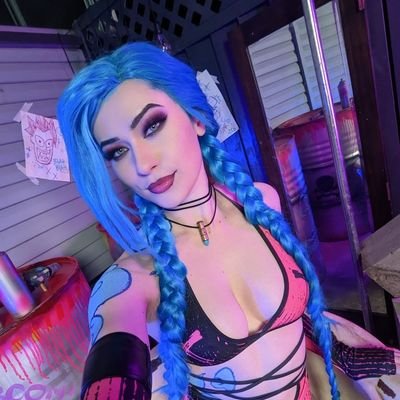
Did a little paint and sip with my boo @k8thesoot last night and I love what we created 😍 Might pop it in my new studio??! Idk?!


I’m going to visit my best female friend tomorrow and stay over at her place for the night. They’ve moved to a place far from the city center. I bought a storybook, a sketchbook, and some paints for my friend’s daughter, Umay, and wrapped them up nicely as a gift. I love buying gifts for Umay! 😍😍😍😍😍😍
显示更多
Ella arrived at Newark Airport from Bellingham, Washington, in the middle of the night, January 2007. We were there waiting to welcome her, comfort her, and clean her off after a cross-country flight that changed her and our lives forever.
She was a part of our family before we even became a family. Ella joined us before we married, before our son grew up, before our daughter was born, before we added four more dogs.
She was a little chocolate brown labradoodle, who proved her strength and fierceness early on when she brought a dead baby bunny back into our house.
She was, as my wife called her, my “constant companion.” Long before the pandemic and even after it, she quietly sat in my office, hearing every conversation, watching every live shot, knowing all the news before it was reported. She didn’t care what the stories were; she just was happy being with me.
When she did leave my office, she loved walks and car rides. She always knew which button to push to lower the window so she could stick her head out and feel the wind in her face.
Over the years, the rides and walks became more infrequent. She lost her vision and hearing. She developed doggy dementia, which led to seizures and breathing issues. She was in diapers. Her dark chocolate brown coat turned gray. But as much as her life changed, she was most happy in our arms or in our bed, laying with us, licking our faces.
Yet Ella’s good days dwindled, and as tough as it was – and we agonized over it -- it became time to let her go. We did that Thursday, an all-time sad day.
For the third time in just over 18 months, we lost one of our beloved furry friends, our other children. We lost Benny in January 2025, Bailey this March, and now Ella. It’s too much. We now are down to two dogs, Apple and Brady. Our house feels empty and our hearts feel broke. Ella’s pain has been transferred to us.
Ella lived almost 20 years – she would have been 20 in November - and was a part of our graduations, celebrations, happy and sad moments. We know what we had and what she meant. But for all the time we had together -- and it was more than most get -- it still wasn’t enough.
We always will remember and love our little Ellies.
显示更多


Real Life Clair Obscur : Expedition 33 🖤🥀
“The Brushstroke of fate refuses to dry, even as the world fades to grey.
Between the silence of the Paint and the whispers of the past, we march on.
No more Visages. The journey is our only Truth.”
▪️MAELLE : @x_kyuhime_x
▪️VERSO : @Leon_Chiro
▪️SCIEL : lunneth_ (IG)
▪️LUNE : @TsunaMidori
This Visual Journey is a gift to the entire Clair Obscur: Expedition 33 community. We poured our hearts in this project, a labor of love crafted to capture the soul and artistry of this incredible Masterpiece.
For You. For Us.
For Those Who Come After.
📷 : The One and Only @azproductioncos ✨
@SandfallGames // @expedition33
#Expedition33# #ClairObscurExpedition33# #ClairObscur# #COE33#
显示更多



What are we calling this interweave of classical painting styling and digital effects/shaders?
Neoclassicore? Renderaissance? Baroquepunk?
Whatever it is I'm in love with it.
显示更多


I read through the New York Times article about visiting @cz_binance home in Dubai.
After looking closely at the photos, I was really impressed by CZ simple style, which feels very true to him from his clothing to the interior design and the way his home is arranged.
I especially love the abstract “Chinese landscape ink painting” style artworks, which carry such a strong Eastern cultural influence.
I’d really love to see more everyday photos of CZ. I’ve already saved quite a few of them on my computer.
显示更多


