与「MiddleEast」相关的搜索结果
MiddleEast 贴吧
一个关键词就是一个贴吧,路径全站唯一。
用户
未找到
包含 MiddleEast 的内容

📍Egyptian actor shares insights on Chinese blockbuster's anti-war message
#China# #Movie# #MiddleEast# #AntiWar#


China commends and supports Pakistan’s mediation effort for deescalation and stands ready to enhance communication and coordination with Pakistan and others to jointly work for a ceasefire and peace in the region. @ForeignOfficePk #MiddleEast# #Iran#
显示更多


I am actually disgusted by the timing of this drop. And this will get a bit more technical.
Let’s do a real technical teardown of this "1,385-sigma Blackwell weight fingerprint" report that OpenAI and Anthropic are breathlessly promoting today, because banking on nobody reading past the headline is how DC narratives get manufactured.
First, look at the actual CUDA maths: when PyTorch initialises model weights (torch.nn.init) with a fixed PRNG seed, curand/Philox parallelises random number generation across the GPU’s Streaming Multiprocessors (SMs).
Because Hopper has 132 SMs and Blackwell has 148 or 152 SMs, the exact same seed lays out initial weights in a different spatial pattern depending on the GPU’s SM count. In huge MoE models, certain low-gradient null-spaces or unrouted slices preserve faint directional traces of those step-0 weights even after training.
So yes, brute-forcing the seed and SM grid can show that a model’s step_0 weight initialisation script ran on a 148/152-SM Blackwell GPU. Now read what the summary explicitly admits in the fine print:
1. Initialisation is not full training: The report literally states that these signatures show how the weights were created, and "support (but do not prove) the inference that Blackwell also participated in model training". Initialising a model checkpoint takes seconds on a single rented dev node before loading the safetensors onto a standard Hopper cluster. The "2,000 to 3,000 Blackwell GPUs" and "$500 million" cluster numbers do not come from the weight fingerprint and Depue admits in his own thread that he simply "estimated" cluster sizes from release schedules and model details.
2. Zero geolocation and zero proof of smuggling: The final sentence of the executive summary explicitly admits that the findings "do not establish the physical location of the chips, how they were acquired, or whether export control regulations were violated". Depue himself rented a cloud GB200 instance just to run his verification test. Commercial labs that are not on the Entity List renting bare-metal Blackwell nodes in offshore clouds (Singapore, Japan, or the Middle East) is completely legal under BIS rules and leaves the exact same SM fingerprint.
Now ask yourself why a former OpenAI researcher dropped this on November 12, the exact day Jensen Huang was pushed out, with OpenAI and Anthropic immediately stepping in to "independently verify" it.
US closed-source labs are watching their paid API moats get eaten alive by free Chinese open-weights models.
Conflating a step-0 PRNG initialisation seed with a "$500M smuggled Blackwell cluster" hands DC hawks the exact pretext OpenAI and Anthropic want to regulate global cloud compute and kneecap open-source AI.
显示更多

"I get calls all the time from the leaders of the world thanking me very much... I said 'Good. When are you going to pay for it?'"
President Trump draws laughs as he jokes about world leaders calling to thank him for U.S. efforts in the Middle East.
Trump says other countries should have addressed the situation years ago instead of leaving the U.S. to take the lead, but now they are grateful for the U.S. mission against Iran.
显示更多


The French are protesting overcrowded schools.
Each dot represents 100 illegal migrants who entered Europe.
Maybe the country shouldn’t have allowed a mass invasion from Africa and the Middle East?
显示更多


Oil prices inched higher in volatile trade after crude exports from the Middle East increased and the G7 nations pledged to boost supplies. Florence Tan has more
显示更多


Just finished "Welcome to Dragon Restaurant" .
A Chinese chef. A war-torn Middle East. One small restaurant serving the only thing war can't destroy — a hot meal.
"Eat well. Live well." Simple words. Devastating meaning when bombs are falling outside your door.
显示更多


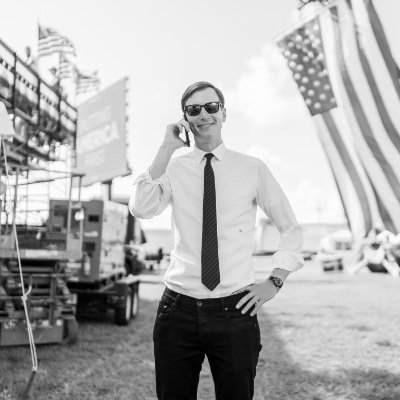
Six years ago, President Trump launched the Abraham Accords and opened a new chapter of peace, partnership, and prosperity in the Middle East.
Many said it was impossible. But with courageous leadership, persistence, and a small group of people willing to challenge old assumptions, we proved that the impossible could be achieved.
For too long, the region was trapped by old ideas and failed frameworks that managed conflict rather than solved it, and too often created incentives that perpetuated division and instability.
The idea behind the Abraham Accords was simple: instead of reinforcing the things that divide people, build bonds that bring them together. Increase understanding. Expand trade and investment. Deepen security cooperation. Create tangible benefits that make people’s lives better and give everyone a stake in peace.
What began as a bold vision has delivered billions in trade, joint innovation, new friendships and partnerships, and a powerful alternative to the failed approaches of the past.
The Middle East is once again at an inflection point. There are breakthrough opportunities today that many will say are impossible. But we have seen what can happen when leaders reject conventional thinking, focus on common interests, and have the courage to pursue a better future.
The Abraham Accords showed that a different path is possible. Now we have an opportunity to build an even broader movement around cooperation, shared prosperity and security—and replace the failed ideas of the past with a new model that gives people across the region something better to believe in and build toward.
We surprised the world once. With the right leadership, focus, patience and courage, I believe we can do it again.
显示更多

🇱🇻 Latvia stands with 🇯🇵 Japan in its concern over recent developments concerning Etorofu Island and intensified Russian military activity in the region.
Actions that heighten tensions undermine regional security and stability. International law and the peaceful resolution of disputes must be respected.
Developments in Euroatlantic, the Middle East and the Indo-Pacific theatres remind us that our security is increasingly interconnected.
显示更多
