与「bilateral」相关的搜索结果
bilateral 贴吧
一个关键词就是一个贴吧,路径全站唯一。
用户
未找到
包含 bilateral 的内容

President Xi Jinping stressed that the Chinese side’s position on safeguarding national reunification and territorial integrity is clear-cut.
It is hoped that the U.S. side will adhere to the correct position of opposing “Taiwan independence,” and handle the Taiwan question with caution, so as to lay a solid foundation for China-U.S. strategic cooperation and the development of bilateral relations.
显示更多

President Xi Jinping held talks with Ecuadorian President Daniel Noboa @DanielNoboaOk.
President Xi pointed out that this year marks the 10th anniversary of the comprehensive strategic partnership between China and Ecuador.
China always views its relations with Ecuador from a strategic and long-term perspective, and will work with Ecuador to bring bilateral relations to new heights and better benefit the two peoples.
显示更多


Chinese President Xi Jinping said on Monday that China stands ready to further strengthen bilateral and multilateral strategic coordination with Brazil. #XinhuaNews#

President Xi Jinping took a phone call from Brazilian President Luiz Inácio Lula da Silva.
President Xi noted that China is ready to strengthen strategic coordination with Brazil at bilateral and multilateral levels, and sustain the sound momentum of building a community with a shared future.
The two sides should join hands to advance high-quality development of greater BRICS cooperation and write a new chapter of uniting for strength within the Global South.
显示更多

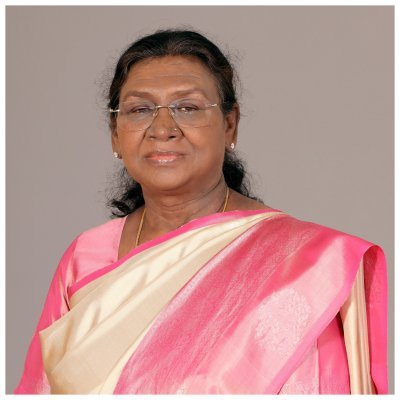
President Droupadi Murmu was warmly received by President Nicușor Dan of Romania at Cotroceni Palace, Bucharest. She was accorded a ceremonial welcome and guard of honour.
The two leaders held productive and forward-looking discussions covering the major dimensions of our bilateral partnership. They also exchanged perspectives on regional and global developments, and on multilateral cooperation.
Three MoUs for bilateral cooperation in the field of science & technology, sports and establishment of Chair of Indian Studies at University of Bucharest were signed on the occasion.
显示更多


A day of clear outcomes, strong partnerships and a shared vision for healthier futures.
Day 3 of the 16th BRICS Health Ministerial Meeting brought together BRICS Member States and Official Partner Countries to strengthen global health cooperation. The unanimous adoption of the BRICS Health Ministers’ Declaration, bilateral meetings, the Healthy Lifestyle Walkathon and India’s healthcare innovations highlighted a shared commitment to resilient, innovative, inclusive and sustainable health systems.
#BRICS2026# #BRICSIndia2026# #IndiaBRICSChairship#
显示更多

Our economic and commercial relationship is a frontier waiting to be fully conquered. Our bilateral trade volume shows a steady positive trajectory, but it represents only a fraction of what is possible.
显示更多


🇺🇸🤝🇱🇧
President Donald J. Trump greets Lebanese President Joseph Auon before a bilateral meeting at the White House.

President Xi Jinping held talks with Namibian President Netumbo Nandi-Ndaitwah. The two presidents jointly announced the elevation of bilateral relations to a China-Namibia community with a shared future for the new era.
President Xi noted that China and Namibia enjoy profound traditional friendship and share common aspirations for development.
China stands ready to work with Namibia to enhance exchanges of development philosophies and synergize development strategies, and partner with each other on their paths to modernization.
显示更多


Tuesday marks the 50th anniversary of diplomatic ties between China and Seychelles. In a recent interview, Seychelles' Minister for Tourism and Culture Amanda Bernstein expressed great expectations for the next 50 years of bilateral relations. (Xinhua)
显示更多
