与「SoftBank」相关的搜索结果
SoftBank 贴吧
一个关键词就是一个贴吧,路径全站唯一。
用户
未找到
包含 SoftBank 的内容

OpenAI数据中心负责人离职,公司称属内部重组
发生了什么: OpenAI数据中心负责人Chris Malone已经离职。他上周已经离开公司,任期大约只有17个月(2025年3月加入)。
Malone之前在Google干了十多年,后来又在Meta做了近5年数据中心相关工作,属于这个领域里比较资深的人。他加入OpenAI的时间点,正好是公司宣布Stargate(星际之门)大规模数据中心计划之后。当时OpenAI正和Oracle、SoftBank等合作,在美国大规模建设算力基础设施,其中德州阿比林(Abilene)的项目比较受关注。
数据中心负责人这个岗位现在特别关键,因为训练和运行大模型需要巨大的电力、土地、芯片和冷却能力,谁负责这块,直接影响公司能不能按时拿到足够算力。
公司内部也做了调整:Malone原本直接向总裁Greg Brockman汇报,后来改成向另一位副总裁汇报,基础设施团队被重新拆分和组织。OpenAI官方回应称,这是为了适应业务规模和速度而做的重组,目前团队依然完整、有明确领导,有能力继续推进计划。同时有报道提到,公司在自建数据中心之外,也在重新考虑更多租赁现成设施的方式。
目前还没有公开说明他具体为什么走,是个人原因、内部调整,还是对战略有不同看法,都还没有官方细节。
显示更多


The biggest opportunities in event aren't always just on stage, they often begin with a simple conversation.
One of the things Singapore Blockchain Week also aims to bring together is an industry conferences that isn't just the content, but also people you meet and the unexpected connections that happen along the way.
A recent example...
During SuperAI (10–11 June), our producer @wendyvanessayew were introduced to @richardjhobbs with @ysiu . Within a week, that introduction had evolved into a collaboration, with Agentic Commerce supporting Singapore Blockchain Week's AI-powered ticketing initiative.
Less than a month later in @WebX_Asia (13–14 July), where Singapore Blockchain Week was proud to be an Official Event Partner. Organised by @coin_post, one of Asia's leading Web3 media companies backed by SoftBank Investment, WebX brought together founders, investors, developers, enterprises, regulators, and ecosystem leaders from around the world.
It was great to reconnect with Yat Siu, meet Naoki Matsuo - CEO of Animoca Brands Japan, and engage with many inspiring founders, investors, builders, and ecosystem leaders from across the region.
One thing became even clearer throughout the journey:
Our industry continues to be built on relationships.
- Every introduction.
- Every coffee chat.
- Every booth visit.
- Every spontaneous conversation.
These moments open doors to new ideas, partnerships, investments, customers, speakers, sponsors, and lifelong friendships. You never know which conversation will shape your next chapter.
Rebuilding Singapore Blockchain Week 2026 (13–17 November) hasn't been easy.
Behind the scenes is a passionate volunteer organising committee committed to creating something bigger than just another conference. We believe Southeast Asia deserves a platform that genuinely connects ecosystems, industries, governments, enterprises, investors, startups, and communities.
Our vision is ambitious:
🌏 The world's first Cross-Border Blockchain Week, connecting 🇸🇬 Singapore with the 🇲🇾 Johor–Singapore Special Economic Zone (JS-SEZ), creating new opportunities for innovation, investment, digital assets, AI, stablecoins, tokenisation, and cross-border collaboration.
To everyone we've met along the journey—from Consensus Hong Kong in February, SuperAI Singapore, WebX Tokyo, and beyond—thank you for your trust, introductions, and belief in what we're building.
This is only the beginning.
If you're interested in speaking, sponsoring, exhibiting, partnering, volunteering, or bringing your community to Singapore, we'd love to hear from you.
Join the movement :
🔹 Website:
🔹 Luma:
🔹 LinkedIn:
🔹 X:
🔹 Telegram:
We look forward to welcoming the global Web3 community to Singapore Blockchain Week 2026 from 13–17 November 2026. 🚀
#SingaporeBlockchainWeek# #SBW2026# #Web3# #Blockchain# #AI# #AgenticCommerce# #WebX# #SuperAI# #DigitalAssets# #Tokenization# #Stablecoins# #Partnerships# #Innovation# #Community# #SoutheastAsia# #Singapore# #Malaysia#
显示更多


Sam Altman just found a legal way to bribe the entire US government into never regulating OpenAI again.
The bribe is $42.6 billion of OpenAI stock.
So Trump will now LOSE money every time a regulator tries to slow OpenAI down.
Here's what makes this so genius:
Altman sat down with Trump, Commerce Secretary Howard Lutnick, and Treasury Secretary Scott Bessent and proposed transferring 5% of OpenAI to a US government sovereign wealth fund modeled on the Alaska Permanent Fund. He also wants Anthropic, Google, Meta, and xAI to hand over 5% each.
The media is covering this as generosity.
But that's not what's happening here...
Two weeks ago the White House quietly forced OpenAI to delay the launch of GPT 5.6. The Commerce Department banned Anthropic's Claude Fable 5 for 18 days.
Both companies are trying to IPO in the next 12 months. Both are getting throttled by federal regulators every time a new model rolls out.
OpenAI is also being investigated by a coalition of 42 state attorneys general in parallel.
Altman looked at what happened to Intel and drew the correct conclusion.
Just to remind you:
Last August, Trump forced Intel to hand over 9.9% of its shares in exchange for CHIPS Act money Intel had already been awarded. A shareholder lawsuit unsealed in March called the deal "extortionary" and is trying to unwind it. Trump said in May he "should have negotiated a larger stake."
Then Nvidia and AMD were forced to hand the US government 15% of their entire China chip revenue in exchange for export licenses.
Altman saw the pattern. He is negotiating from the front instead of the back. He is voluntarily offering 5% now before Trump takes 15% by force later.
Then there's also the Sanders threat:
Bernie Sanders introduced the American AI Sovereign Wealth Fund Act in mid-June. His bill would take 50% of every leading US AI company and use it to fund $1,000 annual dividends to every American. Sanders values the fund at $7 trillion.
Altman is using the Sanders threat to sell Congress on 5%.
5% is the number that makes him look reasonable.
Now this is where it gets really genius...
Microsoft owns roughly 49% of OpenAI. Microsoft was not in the room with Trump.
SoftBank just committed $40 billion to OpenAI. SoftBank was not in the room either.
Neither were the venture funds that led the March round at $852 billion. Neither were the OpenAI employees who own equity in the company.
Every one of them just watched Altman promise 5% of their upside to Trump without a single vote.
Altman is spending shareholder money to buy something only HE benefits from.
And the US government cannot regulate a company it owns 5% of.
Every safety rule that reduces OpenAI's valuation directly reduces the Treasury's own investment. Every model delay reduces the government's future dividend. And every antitrust action against OpenAI now hurts the same agencies supposed to bring those actions.
The government becomes structurally incapable of enforcing the exact safety rules those agencies exist to enforce.
Altman is turning the White House into a shareholder. Shareholders do not regulate - shareholders protect their investment.
Every major AI lab in America now has one option to survive Washington:
Hand over 5% before Congress takes 50%.
The White House already holds equity in Intel, MP Materials, and multiple quantum computing firms. Nvidia and AMD hand over 15% of their China chip revenue for export licenses.
The US government is now the LARGEST venture capitalist in American tech.
And the founders are voluntarily cutting the checks themselves using their investors' money.
What do you think?
显示更多


CZ on Binance's regulatory scars and Why he's not worried
🇯🇵 Japan banned Binance in 2018.
By 2023, Binance had a full license and SoftBank as a shareholder.
🇸🇬 Singapore forced Binance out in 2021.
Users fled to FTX. We all know how that ended.
🇪🇺 On Europe: "It's a loss for Binance. It's also a loss for Europe. It's a lose-lose situation."
Binance is the most scrutinized Exchange in crypto and also one of the most compliant.
Get banned. Get compliant. Get invited back.
History says Binance has done this before.
Pressure today. Licenses tomorrow. That's the Binance pattern.
@cz_binance @heyibinance @_RichardTeng @cz_binance
显示更多


🐱本喵九月:这波日本VPS价格一出来,本喵直接沉默了3秒😹
10元/月还带三网优化?
这已经不是“性价比”,是“地板价开局打怪”了。
🇯🇵 Lamhosting 日本KVM VPS(JPCR系列)
⚡ JPCR-Zero(极低成本体验机)
📌 512MB / 10GB SSD
📌 200GB流量 / 1Gbps
📌 ¥9.99/月
🧪 适合:轻量测试 / 临时节点
🚀 JPCR-A(入门主力款)
📌 1GB / 20GB SSD
📌 500GB流量
📌 ¥16.99/月
💡 轻量建站/基础应用刚好
⚙️ JPCR-B(标准业务款)
📌 2GB / 20GB SSD
📌 1TB流量
📌 ¥32.99/月
📈 正常业务/多任务运行
🔥 JPCR-D(性能拉满)
📌 8GB / 30GB SSD
📌 5TB流量
📌 ¥129.99/月
💪 直接上强度的日本节点
🌏 官方说重点很明确:
✔ 三网优化(Softbank / IIJ / Lumen / PCCWG / TATA)
✔ 日本节点
✔ 流媒体解锁(Netflix / Disney+ / DMM / Abema)
✔ Abuse零容忍(说删就删那种😹)
速度测试:
🐱本喵一句话总结:
这是“便宜日本鸡 + 线路优化 + 流媒体解锁”三件套组合拳。
⚠️ 但也提醒一句:
这种价格段的机器——
👉 稳定性比配置更重要,别只看数字上头
#VPS# #日本VPS# #三网优化# #Lamhosting# #云服务器# #流媒体解锁# #本喵九月# #服务器推荐# #建站# #跨境业务#
显示更多

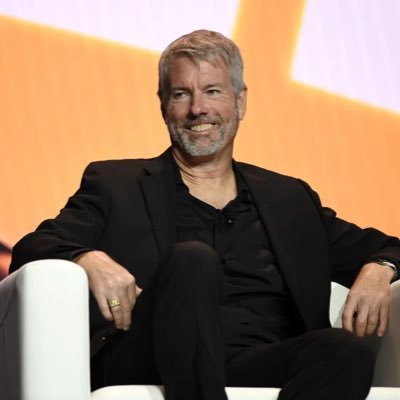
Michael Saylor: "We sold $1.5B of stock backed by $500,000,000 of BTC. We bought back $1.5B of Bitcoin, capturing a Billion dollar gain in the arbitrage."
Softbank: 🤯🤯🤯 This is the best business model in the world. we need to copy this immediately.
显示更多


其实挺有意思的,这次 SpaceX 融资 750 亿美元,估值大约 1.77 万亿美元,确实是一个历史级别的事件。但在它之前,沙特阿美上市时也是历史最大 IPO,最初融资 256 亿美元,算上绿鞋最高可以到 294 亿美元。再往前,阿里巴巴 IPO 融资约 250 亿美元,SoftBank Corp 融资约 235 亿美元,AIA 当年融资也超过 200 亿美元。
这些项目我基本一个都没有参加。
有的是身份限制,有的是地区限制,有的是渠道拿不到额度,有的是根本没有资格,有的是看得懂热闹,但不想在那个位置进去。尤其是这种超大型 IPO,很多时候本来就不是给普通投资者准备的,真正好价格的筹码,往往在上市前很多年就已经被早期股东、主权基金、养老金、机构投资者和承销商核心客户分掉了。
没参加这些大型的 IPO 并不代表什么,就是参加了在最后这轮能赚的钱可能还有限,而且所谓“史上最大”,本身就是不断被取代的。
当年阿里巴巴是历史最大,后来沙特阿美取代了它。沙特阿美之后,SpaceX 又刷新了市场对 IPO 融资规模的认知。未来也许还会有 OpenAI、Anthropic,或者新的能源、机器人、AI 基础设施公司,继续刷新大家对“最大”的理解。
所谓的自洽本身就是不存在的,我每天花大量的时间在 WTI 上,在 Bitcoin 上,那是因为我熟悉,我懂,我能赚钱,我没有参加任何一个大型的 IPO 并不代表我就不赚钱了,赚钱这个词是一个结果。
我说难听点,多数小伙伴参加 SpaceX 的 IPO 赚的钱可能还没有我一次做空 WTI 赚的钱多,你是我你选什么?我肯定是选我懂得,能赚更多得。而不是去祈求多给我点额度,或者运气好。
显示更多

$AMD| The FOMO to buy @AMD Chips is NOW 🧵
Not Financial Advice! DYOR! Research Purpose Only!
The Inference Queen is the biggest winner in Agentic AI where all other CPUs are struggling to compete with a 2yr old EPYC Turin and EPYC Venice is in mass production phase. AMD stresses deployability today on standard x86 platforms (no proprietary architectures required), full software compatibility, and open standards. This positions Venice + Helios as a practical, high-density alternative to competing solutions while underscoring that agentic AI shifts the balance toward CPU-rich racks alongside GPUs, and most importantly, lowering the cost of token to accelerate adoption and innovation.
Context: @WSJ yesterday came out with an article that @OpenAI is condiering drasstically lowering the token prices to win more customers from Anthropic. The narrative "they" are trying to exacerbate the current AI selloff won't last long. This is a fundamental misunderstanding of what is going on, or what I already discussed for months and years. Followers and Subscribers already knew this for years, that this day would come, where token cost will bcome the central discussion among enterprises as there is no such thing as unlimited budget or Tokenmaxxing when they use $NVDA chips or In-house Hyperscalers chips.
I will link various threads if you are interested in understanding the full picture from supply chain to recent TSMC Rapid 2nm expansion up to 12 Fabs total by 2027/2028.
Hyperscalers and AI natives effectively have no choice but to buy more AMD system for Agentic AI as leadership in economical, power-aware, high-volume internal + agentic use. However, due to supply constraints where Supply is far behind Demand, this makes multi-vendor reality along with in-house chips drive faster industry progress, lower overall costs, and better sustainability.
NVIDIA’s Vera Rubin cannot compete with a 2 years old EPYC Turin, but AMD under Dr. Lisa Su has engineered the lowest cost-per-million-tokens, highly competitive energy-efficient solutions, and superior CPU orchestration for agentic AI at scale with Helios. Dr. Su has championed this shift since at least 2023, foreseeing the rise of agentic workflows that demand far more orchestration, parallel agents, and balanced compute well before the industry fully embraced it. Her long-term vision of AI moving from simple prompts to always on, multi-agent systems has driven AMD’s investments in high-core EPYC CPUs and integrated rack-scale solutions, perfectly positioning the company for today’s realities.
The OpenAI-AMD 1GW Helios deployment (starting H2 2026) represents a pivotal vertical integration move that directly supercharges the inference economics. This isn't incremental; it's a structural shift toward ownership of massive, optimized rack-scale capacity, enabling the lowest token costs and triggering the enterprise adoption flywheel.
We need to be honest, $AMD is the only company that made a big bet on Inference since the day Chatgpt became sensational where $NVDA and others were betting big on Training. At the end of the day, Token bill from @AnthropicAI has to obey economics. Meaning the bills rise, companies have to get more out of it to justify the cost. It cannot be an unlimited inference budget, and it has to show up on efficiency, profitability and operating leverage.
1. Tokenomics
After you understand this, you will understand why Citi cited @AnthropicAI is likely to sign a deal with $AMD along with Hyperscalers, AI Labs, Sovereign AI like Softbank 5GW in France and many other countries. However, OpenAI and $META are now wanting faster deployment, and they are AMD shareholders now, they have prioritized allocation. Anthropic and Hyperscalers just cannot compete when Helios Rack lower token cost to$0.0003–$0.0005 per million tokens at GW scale.
Cost to build 1GW data center
1GW Helios Rack full build is estimated $30-$35B 1GW Rubin Rack full build is estimated $45-$55B
Inference (Cost per Million Tokens)
~$NVDA B200 / HGX: ~$0.02–$0.08 on optimized workloads (FP4/MXFP4, speculative decoding). Significant improvement over Hopper but still premium-priced. GB200 NVL72 rack-scale: $0.05–$0.25+
~$AMD Helios Racks: $0.0003-$0.0005 per M tokens, dramatically lower than NVIDIA equivalents in owned infra. MI355X node-level: Up to 40% more tokens per dollar vs. competing solutions ( B200), driven by higher memory capacity (up to 288GB+ HBM), strong bandwidth, and lower acquisition costs.
Training
~$NVDA Rubin Rack is estimated $0.7-$1.2/M Tokens
~$AMD Helios Rack is estimated $0.65-$1.0/M Tokens
Now, OpenAI, META and Hyperscalers can lower Inference cost even further with $AMD EPYC Venice "dense rack" or Agentic AI Rack. AMD published a detailed technical blog emphasizing that the future of agentic AI autonomous, multi-step AI systems requiring heavy orchestration, databases, caching, APIs, and control planes demands massive CPU-dense rack-scale infrastructure, not just GPUs. The catalyst prominently positions their upcoming 6th Gen EPYC "Venice" processors as the key enabler for next-generation dense racks, delivering leadership throughput under real-world power, cooling, and density constraints.
~EPYC Venice (Zen 6 architecture, up to 256 cores / 512 threads per socket) is projected to deliver exceptional rack-level performance. In AMD’s modeled 100 kW rack comparisons, Venice-powered systems are expected to achieve ~3.30x the throughput of NVIDIA’s Vera (88-core Olympus) baseline across a broad mix of agentic-supporting workloads.
~This builds on current-generation 5th Gen EPYC "Turin" (up to 192 cores), which already delivers ~2.37x rack throughput vs. Vera and ~1.6x vs. Intel’s Xeon 6980P (128 cores).
~ Liquid-cooled Turin deployments already support >27,000 CPU cores per rack today. Venice is architected to push this beyond 36,000 cores in the same rack class, dramatically increasing concurrent agent capacity and overall infrastructure efficiency.
2. Ownership vs renting compute from Hyperscalers matter to OpenAI and only owning $AMD chips can meaningfully lower token cost for enterprises.
~Eliminates cloud overhead: No provider margins, utilization buffers, or egress fees. Direct control over power contracts, cooling, scheduling, and orchestration at dedicated facilities.
~Helios optimizations at GW scale: Rack-level density (1.4+ exaFLOPS FP8 per rack), high HBM4 bandwidth, EPYC orchestration for agentic workloads, and superior TCO/TDP. AMD's long-standing focus on tokens per dollar/watt shines here 20-40%+ efficiency edges in inference-heavy scenarios.
~At 1GW+ optimized deployment, inference hits $0.0003–$0.0005 per million tokens (community/analyst models tied to Helios metrics). This is dramatically lower than typical rented/cloud equivalents, especially for high-volume output tokens in agentic flows.
High token bills today, enterprises running heavy agentic/coding/analysis workloads can face $50-100M+/month at current API rates (flagship models $5-30+/M output, scaled to massive volumes).
Post-Helios compression, same volume will drop to $10-15M/month (or better) via lower underlying costs passed through as pricing flexibility, volume tiers, caching, or batch discounts.
ROI thresholds collapse. More companies greenlight pilots → production → massive scaling. Agentic AI (autonomous workflows) multiplies token demand exponentially, but affordability removes the friction.
OpenAI gains flexibility, Unlike more cloud-dependent rivals (Anthropic), they can lower effective pricing, offer aggressive enterprise bundles, or absorb volume without margin destruction directly tackling "high token bill" complaints while maintaining profitability as usage explodes.
3. Agentic AI Models shifted CPU:GPU Ratio to 1:1 toward 3-5:1 with Explosively Token-Hungry Workloads
Agentic AI (autonomous, multi-step agents with planning, tool use, iteration, and self-correction) is fundamentally more compute and token intensive than conversational or single-turn generative AI.
Agentic AI. autonomous, multi-step workflows with orchestration, tool use, parallel agents, data movement, and enterprise integration has dramatically increased the importance of strong host CPUs alongside GPUs. This shifts the CPU-to-GPU ratio higher and makes balanced systems critical toward 1:1 to 5:1 as enterprises testing more than 5-10 agents.
AMD EPYC Venice excels
~Leadership core density (up to 256 Zen 6 cores per socket) for running many agents in parallel, orchestration layers, and high-throughput control-plane tasks.
~Superior performance-per-core and power efficiency ( up to 2.1x higher perf/core and 2.26x better SPECpower vs. NVIDIA Grace in benchmarks).
~Tight integration in Helios: One Venice CPU + multiple MI450 GPUs per node, enabling efficient data feeding to GPUs ("zero-copy"), parallel execution, and full rack utilization for complex agentic loops.
Hyperscalers (Meta, Microsoft, Amazon, Google, Softbank) and AI natives (OpenAI, Anthropic...) are adopting high-core EPYC at scale specifically for these agentic demands, as CPUs now handle a larger share of non-model work (orchestration, policy enforcement, tool calls). This complements AMD’s lower-cost GPUs for overall TCO wins.
~Agents often generate 10–100x+ more tokens per task due to iterative reasoning chains, multiple tool calls, verification loops, and long-context orchestration.
~Goldman Sachs forecasts token consumption multiplying 24x by 2030 (to 120 quadrillion tokens/month) largely driven by agentic adoption in consumer and enterprise.
~Enterprise data shows agent-pattern workloads growing at 680% annualized rates, projected to surpass conversational AI in token volume by Q3 2026.
~Daily enterprise agent token consumption is already in the billions, with complex workflows (coding, workflows, analysis) amplifying this dramatically.
4. Competitive Edge: Winning Customers from Anthropic
Anthropic’s Claude models (especially Opus/Sonnet) excel in complex reasoning and agentic coding, commanding premium positioning. However, their higher underlying costs (heavier reliance on third-party cloud with margins) limit pricing flexibility compared to OpenAI’s owned Helios capacity.
Anthropic is on track to generate $10.9 billion in Q2 revenue. The company expects to achieve its first-ever quarterly adjusted operating profit of $559 million. However, sustaining full-year profitability remains challenging due to immense computing and model training costs
The truth is, Anthropic has no choice but to buy as much $AMD chips as possible if they want to compete with OpenAI or get investors attention. This 5% adjusted operating profit to revenue ratio is just pathetic.
Current pricing dynamics (2026): OpenAI already undercuts on many tiers ( flagship output tokens significantly cheaper than equivalent Claude Opus). Nano/mini models offer 5–10x advantages for volume work. Anthropic holds edges in long-context flat pricing and certain reasoning quality.
OpenAI after Helios Rack Ownership, At $0.0003–$0.0005/M effective costs, OpenAI gains massive headroom to:
~Aggressively discount high-volume agentic tiers or bundles.
~Offer “unlimited” enterprise plans or usage-based models that Anthropic struggles to match without margin erosion.
~Target cost-sensitive, high-throughput agent deployments (dev tools, automation platforms) where token bills explode.
Enterprises facing $ millions in monthly agentic bills will migrate to the provider delivering better economics at scale. OpenAI’s combination of strong models (o-series reasoning) + lowest TCO positions it to erode Anthropic’s enterprise share, especially as agentic becomes the dominant token consumer.
Cheaper tokens expand the total addressable market dramatically. This feeds the data/model improvement loop, justifying further capex. AMD benefits from proven scale pulling in more customers (Meta, Oracle, Microsfot, Amazon, Softbank, TensorWave, LumaAI ... already aligned on Helios).
Conclusion:
Dr. Lisa Su has been laser focused on inference economics since at least 2022–2023, repeatedly emphasizing that the real battleground for AI scalability would be TCO, power efficiency (TDP), and ultimately tokens per dollar and per watt not just raw training FLOPS. While many viewed inference as a secondary, commoditized workload, Dr. Su architected AMD’s roadmap around rack-scale systems optimized for high-volume, sustained inference that would dominate as models matured and usage exploded. Helios represents the culmination of that multi-year bet: a fully integrated, open platform designed precisely for the economics of massive token throughput.
This deep, strategic partnership with OpenAI starting with the 1GW Helios deployment in H2 2026 and scaling to 6GW, is the embodiment of that shared vision. Both companies foresaw a future where agentic AI models evolve to become extraordinarily token-hungry: autonomous agents executing complex, iterative workflows with planning, tool use, verification loops, and long-context reasoning. These workloads can consume 100x+ more tokens per task than traditional chat or single-turn generation, driving exponential demand as capabilities improve and enterprises deploy them at scale.
By owning and optimizing this massive Helios capacity at GW scale, OpenAI achieves inference costs as low as $0.0003–$0.0005 per million tokens. This structural cost advantage allows OpenAI to absorb the coming token explosion profitably, dramatically lower effective pricing for enterprises, and win high-volume agentic workloads from higher-cost competitors like Anthropic. What was once a prohibitive monthly token bill becomes an affordable accelerator for productivity and innovation.
The OpenAI-AMD alliance validates Dr. Su’s prescient strategy and turns the Agentic flywheel into reality:
Collapsing inference costs
→ explosive token consumption
→ richer data and better models
→ accelerate greater demand.
This partnership doesn’t just address today’s economics, it positions both leaders at the center of the infrastructure buildout that will power AI’s next decade. By delivering the lowest inference economics at scale, OpenAI not only solves enterprise bill pain but gains a decisive weapon to win share from higher-cost rivals like Anthropic. And that is why @OpenAI and $META will deploy EPYC Dense Rack
Not Financial Advice! DYOR! Research Purpose Only!
显示更多


🚨 BREAKING:
SOFTBANK CEO MASAYOSHI SON JUST SAID:
"I THINK AI IS MORE THAN 10X, PROBABLY 50X BIGGER THAN DOT-COM."
HE IS FORBES #1# BILLIONAIRE IN ASIA WHO MADE OVER $100.7 BILLION INVESTING
HE DEFINITELY KNOWS SOMETHING!!
显示更多


Masayoshi Son has been right twice in a way that changed the world and he is making the same call again (Save this).
Alibaba, $20 million in 2000 turned into $130 billion.
ARM, bought for $32 billion in 2016 when the market thought it was a smartphone chip business, now the architecture underneath every major AI chip being built today.
Now he is saying AI is 50 times bigger than the dot-com era and he is not concerned about corrections. He says if there is one, that is the best buying opportunity of the decade.
When asked where the next trillion-dollar company comes from, he says it's in physical AI and in robotics.
Masa has spent three years assembling every piece of the stack required to own this category.
SoftBank holds 90% of ARM, the architecture inside every major AI chip deployed globally today, including Nvidia's Vera CPU, Amazon Graviton, Google Axion, and Microsoft Cobalt.
Every robot running edge inference will almost certainly run on ARM.
SoftBank completed a $40 billion investment into OpenAI in late 2025, making it the largest external backer of the company building the cognitive layer that physical robots will run on.
In October 2025, SoftBank acquired ABB Robotics for $5.4 billion, one of the most mature industrial robot manufacturers in the world, deployed across thousands of factories globally.
SoftBank then created Roze AI, consolidating its robotics investments with a target $100 billion IPO already in process with Goldman Sachs, JPMorgan, and Morgan Stanley as underwriters.
The market is beginning to confirm the thesis.
The humanoid robot market was roughly $3 billion in 2025 and Barclays projects it reaches $200 billion by 2035 at a 48% compound annual growth rate.
SoftBank is the most complete expression of the physical AI thesis available in public markets today, ARM for the chip royalties,
OpenAI for the cognitive layer, ABB for manufacturing, Roze AI for the robotics platform, and Stargate for the compute infrastructure underneath all of it.
Son has not just identified the next wave and has built the stack to own it before the market agrees with him.
Come join Milk Road Pro and get our full physical AI breakdown which names we're watching across the robotics stack and our full AI thesis.
Link below
显示更多
